
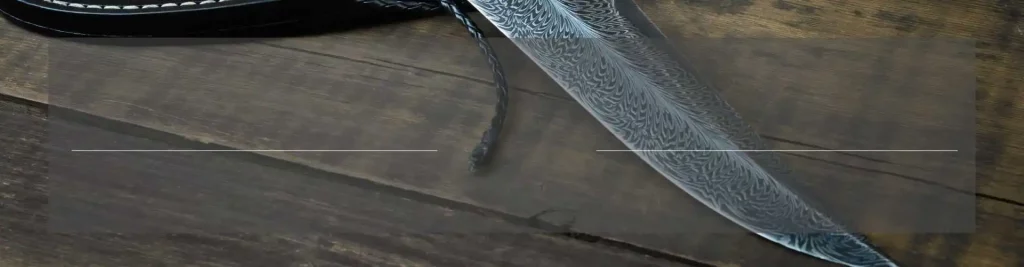
Daggers, Tracker Knives & Karambits: Complete Guide to Each Blade Type + Handmade Collection
What Is a Dagger and What Are Its Types?
A dagger is a short-to-medium fixed blade ground symmetrically on both edges from a raised center ridge, producing a double-edged profile designed primarily for a thrusting motion. The double-edged geometry separates a dagger from all single-edged hunting knives, bowie knives, and skinner knives in this collection. The center ridge runs from the ricasso — the unsharpened section above the cross-guard — to the blade tip, establishing bilateral edge symmetry across the full cutting geometry. Three dagger sub-types appear in collector, ceremonial, and practical carry contexts: the stiletto, the dirk, and the boot knife.
Stiletto
A stiletto is a dagger sub-type with an extremely narrow, needle-profile blade optimised entirely for thrusting and tip penetration. The stiletto blade width at the widest point does not exceed 0.5 to 0.7 inches — narrower than any other dagger sub-type. The stiletto cross-guard and quillons protect the hand during thrust execution. Historical context: Italian Renaissance, 14th to 17th century. Recommended for collector display, theatrical costuming, and historical replica purchase.
Dirk
A dirk is a long-bladed dagger with a single fuller groove running parallel to the center ridge along the blade flat. Dirk blades range from 8 to 12 inches — longer than a stiletto, shorter than a short sword. The dirk carries a simple cross-guard and a round or tapered pommel. Historical context: Scottish Highland culture, 16th to 19th century, worn as a companion blade to the broadsword. Recommended for handmade dagger for sale collector and display purchase.
Boot Knife
A boot knife is a compact double-edged dagger with a blade of 4 to 6 inches, designed for concealed carry in a boot sheath. Boot knife handles lack full cross-guard protection — the handle is straight, compact, and profiled for fast one-handed draw from a vertical boot sheath. Boot knives in damascus dagger for sale configurations provide collector and gift value alongside the functional carry geometry. Recommended for EDC-adjacent collector purchase and dagger knife gift orders.
What Is a Tracker Knife?
A tracker knife is a multi-edge fixed-blade survival tool developed by Tom Brown Jr. — naturalist, wilderness survival instructor, and author — in the second half of the 20th century. The tracker knife carries four distinct edge profiles on a single blade: a primary straight cutting edge, a notched spine for scraping and processing, sawtooth serrations for wood-cutting and cord-cutting tasks, and a gut hook at the blade heel for field dressing without puncturing internal organs. Blade thickness: 0.18 to 0.25 inches. Standard gut hook diameter: 0.35 to 0.5 inches for deer-sized game.
Tracker Knife vs. Survival Knife: What Is the Difference?
A standard survival knife carries one primary cutting edge and, in most configurations, a smooth or lightly serrated spine — a single-function blade geometry. A tracker knife carries four distinct edge profiles on the same blade, replacing four separate tools. The notched spine performs scraping tasks that require a smooth blade edge on a standard survival knife. The integrated gut hook performs field dressing tasks that require a separate hook tool on a standard fishing and camping knife or hunting blade. The tracker knife trades blade simplicity for multi-function coverage in a single fixed-blade tool.
What Is a Karambit Knife?
Karambit Origin and Design
A karambit — also written kerambit or korambit — is a curved, talon-profile blade originating in the Minangkabau culture of West Sumatra, Indonesia, in use from at least the 11th century. The karambit carries two defining geometric attributes absent from every other blade type in this collection: a finger ring at the pommel end of the handle, which retains the blade in the hand during use, and a hawkbill inward curve along the edge radius that concentrates cutting force at the tip. The blade curves inward toward the carrier rather than away — inverting the cutting geometry of all straight-blade knife types. Historical use context: silat, the indigenous martial arts tradition of the Minangkabau and broader Malay Archipelago peoples.
Modern Karambit Uses
Modern karambit use divides into three distinct categories: tactical everyday carry, training practice, and collector purchase. The tactical carry karambit is a fixed or folding blade in a deployment-ready configuration. Blade steels for this application include D2 tool steel at HRC 60–62 for hard-use edge retention and J2 stainless at HRC 56–58 for corrosion-resistant daily carry. A training karambit is a distinct sub-entity: a blunted, rubber, or aluminium practice blade in the same hawkbill-and-finger-ring geometry, used for martial arts technique training without live-blade risk. The collector karambit — particularly a damascus karambit — targets buyers seeking the distinctive curved geometry and Damascus pattern in a display or gift configuration.
Fixed Karambit vs. Folding Karambit
A fixed karambit carries the hawkbill blade and finger ring in a single rigid unit — blade, guard, and ring form one fixed geometry with no pivot mechanism. A folding karambit carries the same curved blade and finger ring but adds a pivot mechanism, allowing the blade to fold into the handle for pocket carry — the same deployment geometry as a folding knife. Fixed karambits provide greater structural rigidity and faster deployment from a belt or pocket clip sheath. Folding karambits provide legal-carry geometry in jurisdictions where fixed-blade carry laws apply a blade length threshold. Both fixed and folding karambits appear in the HM Knives collection in D2 and J2 steel configurations.
HM Knives produces high quality handmade specialist blades for sale across three blade types: daggers, tracker knives, and karambits. The grid below is split by entity type. Each product card specifies blade steel, geometry, blade length, handle material, and primary use case — collector, tactical, survival, or gift.
| Signal | Detail | ||||
|---|---|---|---|---|---|
| ★ HANDMADE | Every blade is forged and finished by hand — no factory production and no machine-stamped components. | ||||
| ⚙ STEEL | Three blade steels: Damascus pattern-welded (HRC 58–60) | J2 high-carbon stainless (HRC 56–58) | and D2 tool steel (HRC 60–62). | ||
| ⚡ COLLECTION | 6 specialist blade models — daggers | tracker knives | and karambits across Damascus | J2 | and D2 configurations. |
| ✎ ENGRAVING | Custom blade and handle engraving available on all models for collector | gift | and personalized tactical orders. | ||
| ✈ SHIPPING | Ships worldwide: UAE | Canada | USA | UK | and all international destinations. UAE delivery: 7–14 business days. |
| ◈ PACKAGING | Every blade ships in branded gift packaging at no additional cost. Collector and gift orders welcomed. |
Daggers / Tracker Knives / Karambits Collection
Every handmade dagger, tracker knife, and karambit for sale in this collection delivers a Damascus, J2, or D2 steel blade, custom engraving on request, and worldwide delivery to the UAE and all international destinations.
-
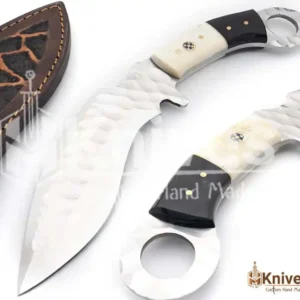
Bone Karambit Knife — Full Tang, Genuine Horn and Bone Handle
$195.00 -
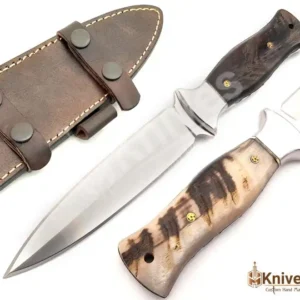
D2 Steel Hunting Dagger Knife with Sheep Horn Handle
$110.00 -
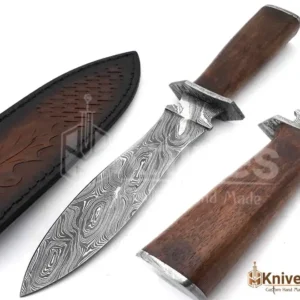
Damascus Dagger Knife — Built for Hunting and Outdoor Survival
$155.00 -
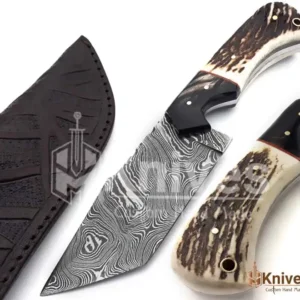
Damascus Tanto Knife — Genuine Stag Handle
$160.00 -
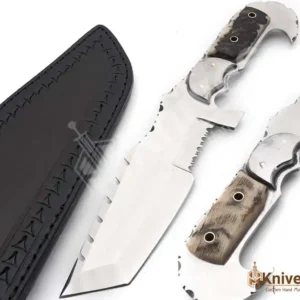
High Polish Trekker Dagger — Sheep Horn and Damascus Handle
$315.00 -
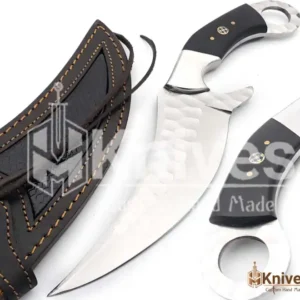
Karambit Knife for Outdoor Use — J2 Steel, Full Tang
$195.00
Are Daggers and Karambits Legal to Own and Carry?
Daggers, tracker knives, and karambits face different legal classifications depending on jurisdiction. A tracker knife — single-primary-edge with multi-function spine tools — faces fewer automatic restrictions than a double-edged dagger in most jurisdictions. A double-edged dagger and a karambit with a finger ring each face specific restrictions that do not apply to single-edged fixed blades. Ownership laws and carry laws are distinct — a blade legal to own may require a permit or face restrictions on carry, transport, or concealment.
Double-Edged Blade Legal Classification
Double-edged blades — daggers, stilettos, and dirks with bilateral edge geometry — face specific statutory restrictions in several US states and international jurisdictions that do not apply to single-edged blades. Some US states classify double-edged blades under a distinct statutory category regardless of blade length, with restrictions on concealed carry, public carry, or commercial sale. Several international jurisdictions — including the UK, Australia, and Canada — classify double-edged blades under restricted or prohibited categories for carry purposes. Buyers must verify applicable laws in their location before purchasing a double-edged blade and before any carry or transport.
Karambit Finger-Ring Legal Classification
Karambits face two potential legal classification issues in addition to blade length. The finger ring identifies the karambit as a retention tool in several jurisdictions, placing it under concealed weapon statutes in some US states and under prohibited weapon categories in some international jurisdictions where the ring is treated as a knuckle-duster analog. The hawkbill inward curve of the blade edge may trigger additional classification in jurisdictions that distinguish single-plane-cut from inward-curve-cut geometry. Buyers must verify applicable local statutes before purchasing any karambit for carry or transport.
HM Knives Legal Notice
HM Knives does not provide legal advice. Double-edged blade laws, karambit classification, finger-ring device statutes, and carry regulations vary by jurisdiction and change over time. Buyers must verify the laws applicable to their location — covering ownership, carry, transport, and commercial purchase — before buying any blade from this page. For US knife law research, the American Knife & Tool Institute (AKTI) maintains a state-by-state reference at akti.org.
Damascus, J2, or D2: Which Steel Suits Each Blade Type?
Damascus Steel for Collector Daggers and Display Pieces
Damascus steel at HRC 58–60 suits collector daggers and display karambits — the hand-forged, acid-etched pattern carries strong visual appeal for gift and collector purchase. Edge geometry for a damascus dagger: 15–20 degrees per side, bilateral symmetric grind matching the center-ridge geometry. Damascus daggers require mineral oil or camellia oil applied every 30 days in storage to prevent oxidation on both blade faces. Not recommended for hard-use tracker or tactical carry applications where abrasion resistance is the primary priority.
J2 Steel for Training Karambits and Outdoor Tracker Use
J2 high-carbon stainless steel at HRC 56–58 suits training karambits and outdoor tracker knife carry. The chromium content in J2 resists oxidation in contact-with-sweat and humid outdoor conditions without weekly blade oiling. J2 tracker knives maintain a 20–25 degree primary edge for 4–5 weeks of moderate outdoor use before resharpening. J2 karambits hold a 15–18 degree curved-edge bevel for 3–4 weeks of regular tactical carry tasks. J2 is the lowest-maintenance daily carry and field-use steel of the three options on this page.
D2 Steel for Hard-Use Tracker and Tactical Karambit Applications
D2 tool steel at HRC 60–62 suits hard-use tracker knife carry and tactical karambit applications where edge retention under repeated abrasion is the priority. D2 holds a 20-degree tracker edge through 6–8 weeks of heavy bushcraft use — scraping, notched spine processing, gut hook field dressing — before resharpening. D2 holds a karambit curved edge at 15 degrees per side through 5–7 weeks of regular tactical carry. D2 steel offers lower corrosion resistance than J2 — apply a thin coat of oil monthly for long-term storage.
| Blade Type,Sub-Type / Variant,Defining Geometry,Defining Attribute,Historical Origin,Primary Use Case | |||
|---|---|---|---|
| Dagger,Stiletto,Needle-profile — blade width 0.5–0.7 inches at widest point,Double-edged with center ridge — bilateral edge symmetry,Italian Renaissance, 14th–17th century,Collector display | theatrical | historical replica | |
| Dagger,Dirk,Blade length 8–12 inches — single fuller groove parallel to center ridge,Double-edged with cross-guard | simple round or tapered pommel,Scottish Highland culture, 16th–19th century,Collector display | handmade dagger gift purchase | |
| Dagger,Boot Knife,Blade length 4–6 inches — straight compact handle for vertical boot sheath draw,Double-edged | no full cross-guard | one-hand draw geometry,Concealed carry tradition,EDC-adjacent collector | dagger knife gift orders |
| Tracker Knife,Standard Tracker,Blade thickness 0.18–0.25 inches — four edge profiles on one blade,Notched spine + sawtooth serrations + gut hook (diameter 0.35–0.5 inches) + primary edge,Developed by Tom Brown Jr. — 20th century,Survival and bushcraft carry | field dressing | ||
| Karambit,Fixed Karambit,Hawkbill inward curve — edge faces inward toward carrier,Finger ring at pommel end — retention geometry absent from all other blade types,Minangkabau culture, West Sumatra, Indonesia, 11th century,Tactical carry | silat training | collector purchase | |
| Karambit,Folding Karambit,Same hawkbill curve and finger ring as fixed — pivot mechanism enables blade to fold into handle,Folding deployment geometry for pocket carry — same finger ring retention as fixed variant,Modern tactical adaptation of fixed-blade form,Jurisdictions with fixed-blade carry length restrictions | EDC tactical carry |
Which Blade Type Matches Your Purpose?
| Attribute | Damascus (HRC 58–60) | J2 Stainless (HRC 56–58) | D2 Tool Steel (HRC 60–62) |
|---|---|---|---|
| Best use case | Collector daggers; display karambits | Training karambits; outdoor tracker use | Hard-use tactical karambit; bushcraft tracker |
| Corrosion resistance | Moderate — monthly oiling required | High — no weekly oiling needed | Moderate — monthly oiling for storage |
| Edge retention (hard use) | 4–5 weeks at 15–20° per side | 4–5 weeks at 15–18° per side | 6–8 weeks at 15–20° per side |
| Dagger edge angle | 15–20° per side (bilateral symmetric grind) | 15–20° per side | 18–22° per side |
| Karambit curved edge | 15–18° per side (tapered ceramic rod or curved stone only) | 15–18° per side | 15° per side |
| Resharpening tool | Whetstone or ceramic rod | Whetstone or ceramic rod | Diamond-coated whetstone or ceramic rod |
| Maintenance interval | Monthly oiling — blade and handle | Monthly pivot cleaning only (folding); no blade oiling on fixed | Monthly oiling for long-term storage |
| Price range | From $85 | From $75 | From $80 |
How Do You Care for Specialist Blades?
Clean a Double-Edged Blade Along the Spine, Not Across the Edge
Double-edged dagger blades require a different cleaning motion than single-edged blades. A single-edged blade permits a lateral wipe across the flat — the spine side provides a safe guide surface for the cleaning cloth. A double-edged dagger has no safe flat spine side: both flat faces run directly to a sharpened edge. Wipe a double-edged blade along the spine — blade tip toward the handle, cloth running parallel to the center ridge, not across it. Use a lint-free cotton cloth with 2 drops of mineral oil per face. Wipe both faces and the ricasso. Dry the blade completely before sheathing.
Sharpen a Karambit Curved Blade with a Tapered Ceramic Rod
A karambit hawkbill edge cannot be sharpened on a flat whetstone. The inward hawkbill curve of the edge radius — the defining geometric attribute of the karambit — faces inward, away from the flat sharpening surface. A flat whetstone contacts only the outermost tip of the curve and produces an uneven bevel across the full edge length.
The correct sharpening tool for a karambit is a tapered ceramic rod or a curved sharpening stone with a convex face profile. Position the tapered rod inside the hawkbill curve. Maintain a 15-degree angle between the rod face and the blade bevel. Draw the rod along the curve from blade heel to tip in 8 to 10 strokes per side. Progress from a medium-grit ceramic rod (600–800 equivalent) to a fine-grit rod (1,200 equivalent) for edge refinement. Strop on a leather belt 5 times per side to align the final apex.
Store Collector Daggers and Display Pieces in Controlled Conditions
Collector daggers and display karambits in Damascus or D2 steel require controlled storage to prevent long-term oxidation and handle material degradation. Apply 2 to 3 drops of camellia oil or Renaissance Wax to both blade faces every 60 days during storage. Store in a dry environment — relative humidity below 55%. Do not store in a leather sheath for long-term display: leather retains moisture and accelerates blade oxidation on both Damascus and D2 steel over months. Use a synthetic or wood display stand with minimal blade contact. Stag horn and bone handles require annual application of bone conditioner or food-grade mineral oil to prevent cracking in low-humidity storage environments.
HM Knives forges every blade by hand — no factory production, no machine-stamped blade profiles, no outsourced grinding. Three steel options: Damascus pattern-welded at HRC 58–60, J2 high-carbon stainless at HRC 56–58, and D2 tool steel at HRC 60–62. Custom engraving on blade and handle is available on all 6 models. Gift packaging is included with every order at no additional cost.
Ships worldwide: UAE, Canada, USA, UK, Australia, and all international destinations. UAE delivery: 7 to 14 business days. Standard international shipping: 10 to 18 business days. Tracking provided on every order.
For EDC and pocket carry options, browse folding knives. For fixed-blade field tools, browse hunting knives. Custom orders, wholesale enquiries, and engraving requests: contact page.