Knife Guides
Fifteen guides written by the people who forge the knives. They exist because we answer the same questions by email every week and would rather answer them properly once. Nothing here is written to sell you a knife — several of them tell you when not to buy one from us.
Grouped by what you are trying to work out. The full list in date order is below.
Start Here: Choosing a Knife
If you do not yet know what you are looking for, these four answer that first.
- Best Knife Type for Every Use Case — Kitchen wants length and thinness, hunting wants a controlled point, camping wants a full tang, everyday carry wants something you will not notice. The right knife by task, with blade length, profile and edge angle for each.
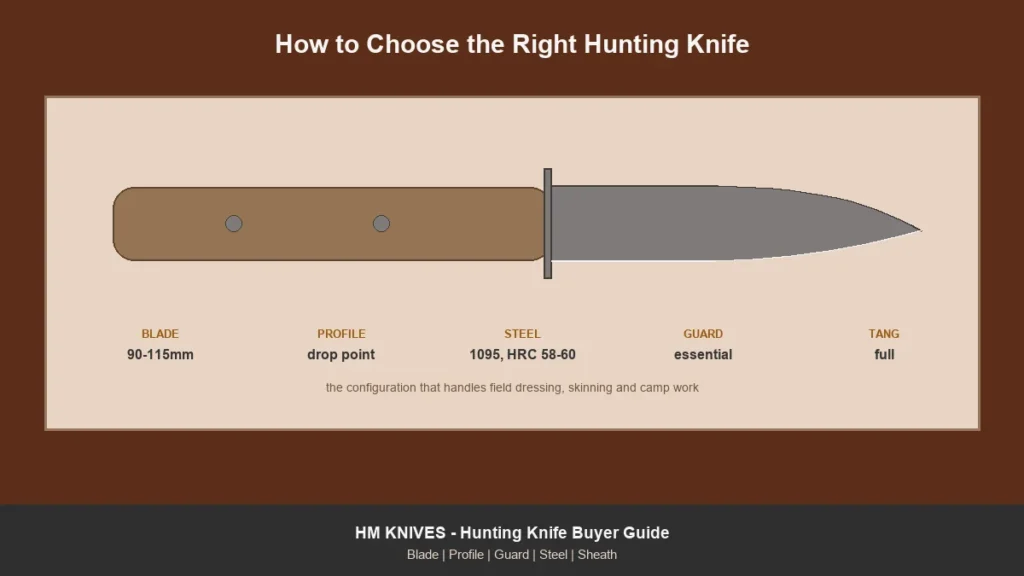
- How to Choose the Right Hunting Knife: Complete Buyer’s Guide — A full tang drop point, 90-115mm, HRC 58-60, with a guard and a grippy handle. Blade length by game size, why the guard is a safety feature rather than decoration, and the features that are worth paying for.
- Best Bowie Knife to Buy: A Complete Buyer’s Guide — Most buyers want a 200-230mm camp bowie and buy a 300mm classic because photographs do not convey weight. What defines a bowie, which size suits which work, and why the balance point decides whether it actually chops.
- Where should you spend your money on knives? — Heat treatment and thickness behind the edge decide how a knife cuts, and neither photographs. Where the money genuinely helps, where it does not, and why a cheaper knife plus a sharpening kit beats an expensive one.
Steel and What It Actually Does
The most misrepresented subject in the trade, and the one we are most often asked about. Short version: our Damascus is carbon steel and it rusts.
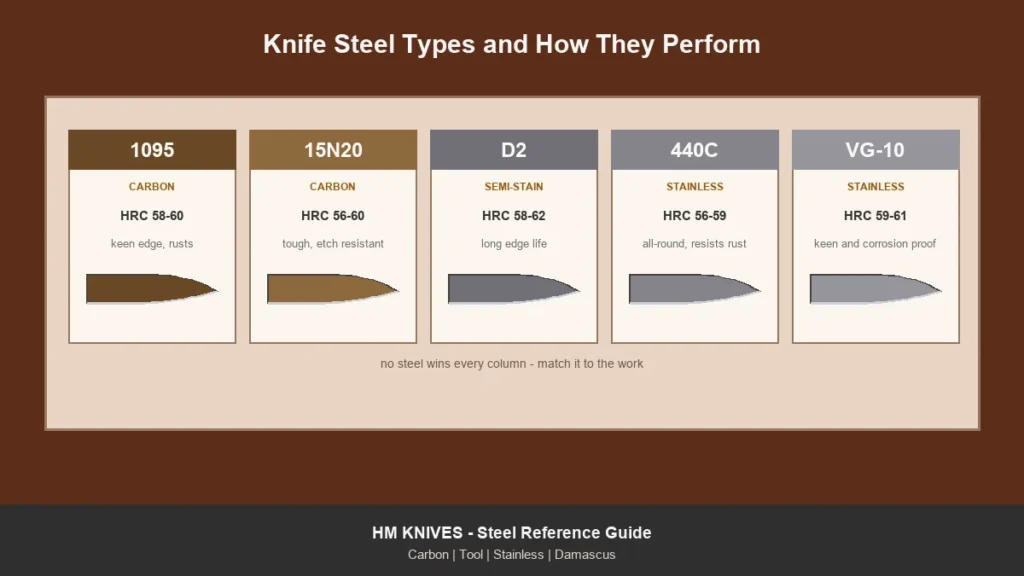
- What are the different knife steel types and how do they perform? — A steel name tells you what a blade could be; the hardness tells you what it is. What each alloying element does, what HRC means in practice, and how 1095, 15N20, D2, 440C and VG-10 compare across the four properties.
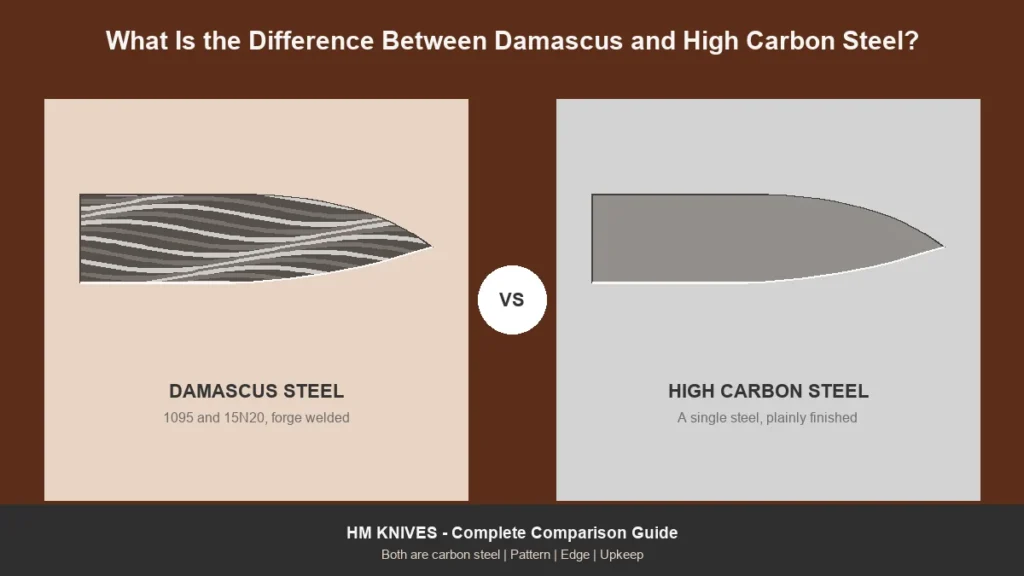
- Damascus vs High Carbon Steel: Complete Comparison — Damascus is a construction method, not a steel. Ours is 1095 and 15N20 at HRC 58-60 – both carbon steels, so it rusts. What the layers genuinely change, what they do not, and when plain high carbon is the better buy.
- What is the difference between stainless and carbon steel knives? — Chromium above about 11 percent forms a self-healing film; that is the whole difference. How the two families compare on edge life, toughness, sharpening and upkeep, and which one your environment actually calls for.
- How is damascus steel actually made? — Stack, forge weld, draw, fold, repeat – then shape, harden, grind and etch. The forge welding window is about 250 degrees wide and cannot be repaired if missed. Six to eight hours of work before it becomes a blade at all.
Blade Shape and Geometry
Shape decides what a knife is good at far more than steel does.
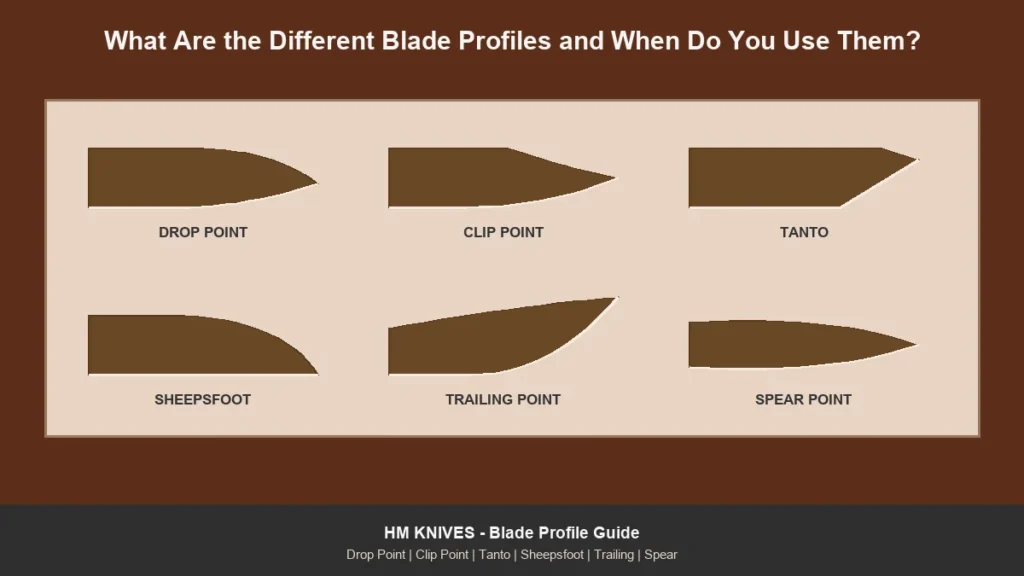
- What are the different blade profiles and when to use them? — Drop point, clip point, tanto, sheepsfoot, trailing point and more, compared on tip strength, belly and piercing. Every profile trades point strength against slicing belly – this is where each one sits and why.
- What are blade profiles with visual examples and use cases? — Start with the cut, not the shape. The four cutting motions – push, rock, slice, pierce – and the blade profile built for each, plus why a bellied blade leaves slices attached at the ends on a flat board.
- Folding vs Fixed Blade Knives: Which Should You Choose? — A folder routes every load through its pivot and lock; a full tang fixed blade has no joint to fail. Strength, carry, lock types, cleaning, legality and the geometry limit that caps a folder’s blade length.
Materials and How a Knife Is Built
Handles, pins, sheaths, and what hand forging genuinely buys you.
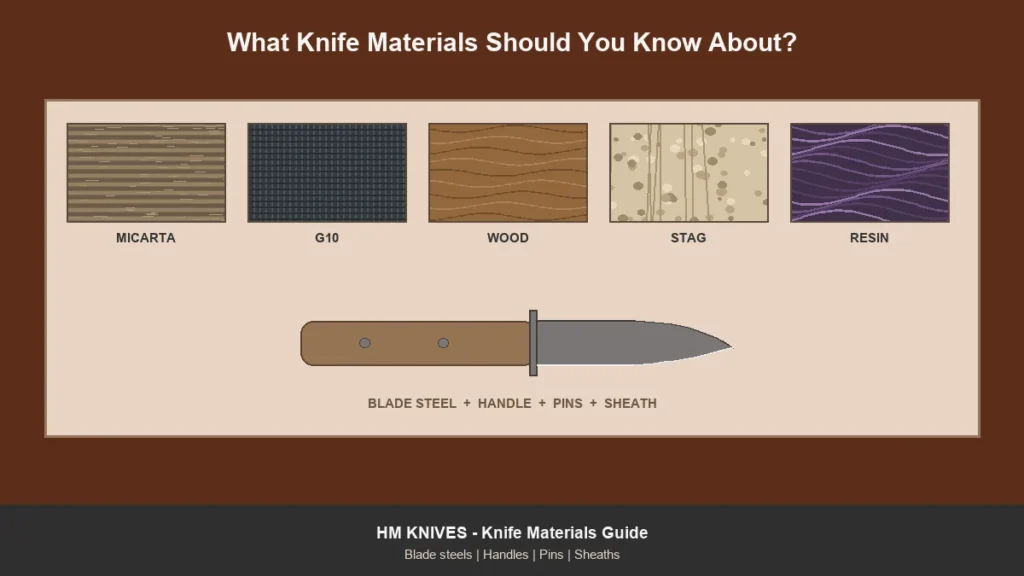
- What knife materials should you know about and how do they compare? — Four material decisions, not one: blade steel, handle, pins and sheath. What 1095, 15N20, D2 and the stainless grades actually do, and why micarta grips better wet while stag and polished bone do not.
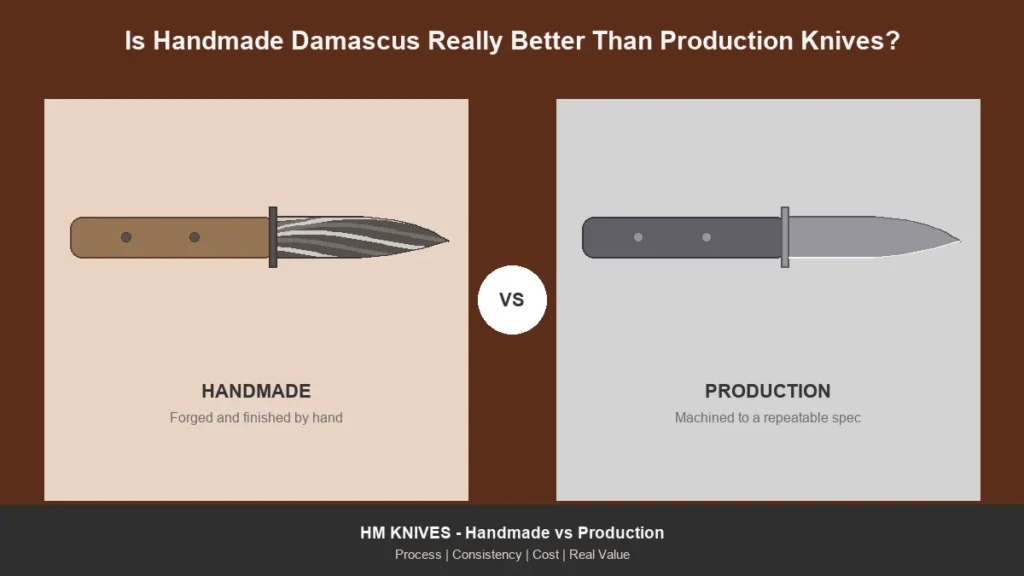
- Is handmade damascus steel really better than production knives? — Handmade is not a performance specification. Where production genuinely wins, where hand work earns its premium, what the extra money actually buys, and why under $100 a production knife is the better purchase.
Care and Sharpening
The part that decides whether a knife lasts five years or fifty.
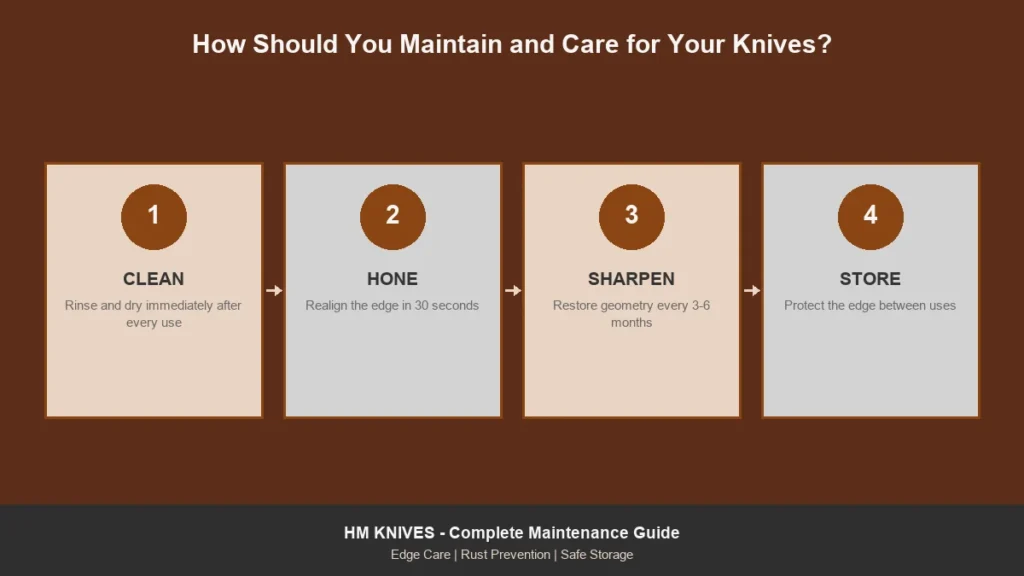
- Complete Knife Maintenance & Care Guide — Dry it, oil it, and never store it in a leather sheath. Honing versus sharpening, whetstone grits, edge angles by knife type, rust prevention for carbon steel, and a maintenance routine that takes minutes a week.
- How to Sharpen a Knife: A Complete Step-by-Step Guide — You are not polishing an edge, you are grinding two bevels until they meet, and the burr is how you know they have. Four tests for a dull edge, how to hold the angle, and the full whetstone sequence step by step.
Looking for a Knife Rather Than an Answer?
Every guide links to the pieces it describes. To go straight to the collections:
- Hunting knives
- Bowie knives
- Skinner knives
- Kitchen and chef knives
- Fishing and camping knives
- Folding knives
- Daggers, trekkers and karambits
- Viking axes
Common questions are answered on our FAQ page, and the workshop itself is described on the About HM Knives page.
All Guides, Most Recent First
The full archive follows below.