

Kitchen & Chef Knives: Shapes, Steel and Which One to Buy
This collection holds 13 hand-forged kitchen pieces, from $100 to $295, including single chef knives, cleavers and bull cutters, and five- and seven-piece chef sets. Everything is full tang, finished at HRC 58–60, and forged rather than stamped.
One thing to know before you buy: these are carbon steel blades, including the Damascus. They take a fine edge and they will rust if you leave them wet. Hand wash, dry immediately, never the dishwasher. If that sounds like too much work, buy stainless from someone else — we would rather say so than have you disappointed.
Which Knife for Which Job
| What you are doing | What to look for | From this collection |
|---|---|---|
| General prep — vegetables, herbs, boning out | A chef knife with belly and reach | Bone Handle Chef Knife, 11 in Damascus at $140 |
| Everyday kitchen work on a budget | Full tang, easy to maintain | D2 Steel Kitchen Knife at $110 |
| Breaking down large cuts of meat | Mass and a broad blade | Bull Cutter, J2 steel at $135 |
| Going through joints and small bones | A heavy rectangular blade | D2 Meat Chopper at $130 Meat Chopper, D2 steel at $165 |
| Fitting out a kitchen in one go | A matched set | 5-piece Damascus set, wood at $235 7-piece Damascus set, bone at $295 |
| A gift that will get used | Matched handles, presentation finish | 5-piece set, polished resin at $235 |
The Collection
Every kitchen piece we currently have, with prices.
-
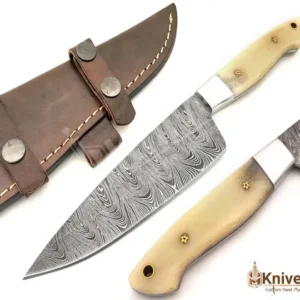
Bone Handle Chef Knife — Damascus Steel, 11 Inches
$140.00 -
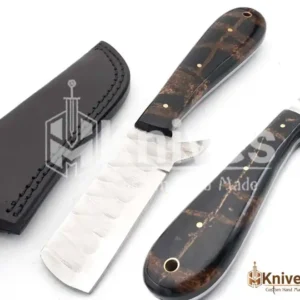
Bull Cutter Knife — Full Tang J2 Steel with Resin Handle
$135.00 -
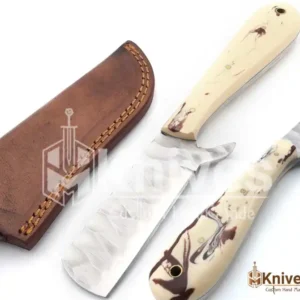
Bull Cutter Knife — Patterned Resin Handle, J2 Steel
$135.00 -
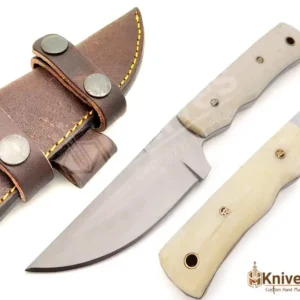
D2 Skinning Knife — Full Tang with Bone Handle
$110.00 -
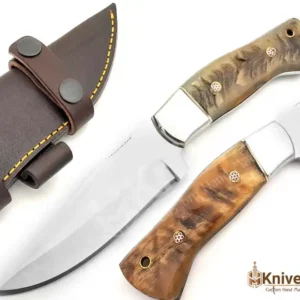
D2 Steel Kitchen Knife — Full Tang with Sheep Horn Handle
$110.00 -
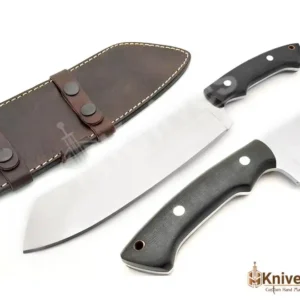
D2 Steel Meat Chopper — Full Tang, Micarta Handle
$130.00 -
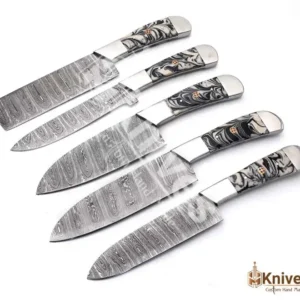
Damascus Chef Knife Set — 5 Pieces with High Polish Resin Handles
$235.00 -
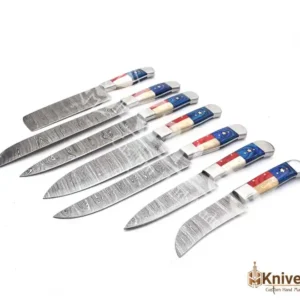
Damascus Chef Knife Set — 7 Pieces with Bone Handles
$295.00 -
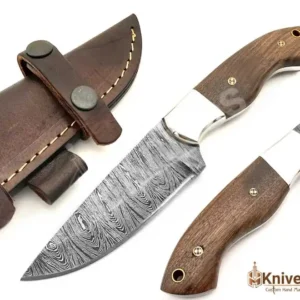
Damascus Skinner Knife — 9 Inch, Natural Wood Handle
$100.00 -
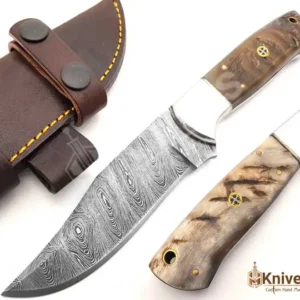
Damascus Skinner Knife — Sheep Horn Handle with Mosaic Pin Detail
$110.00 -
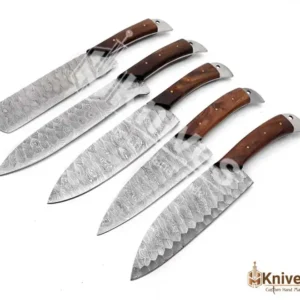
Damascus Steel Chef Set 5 Pieces Forged Blades Wood Handle
$235.00 -
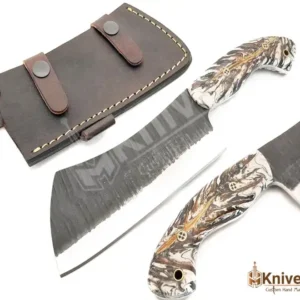
Meat Chopper Knife — D2 Steel, Full Tang
$165.00 -
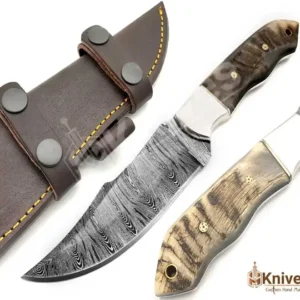
Sheep Skinner Knife — Damascus Blade with Sheep Horn Handle
$100.00
The Shapes and What Each One Is For
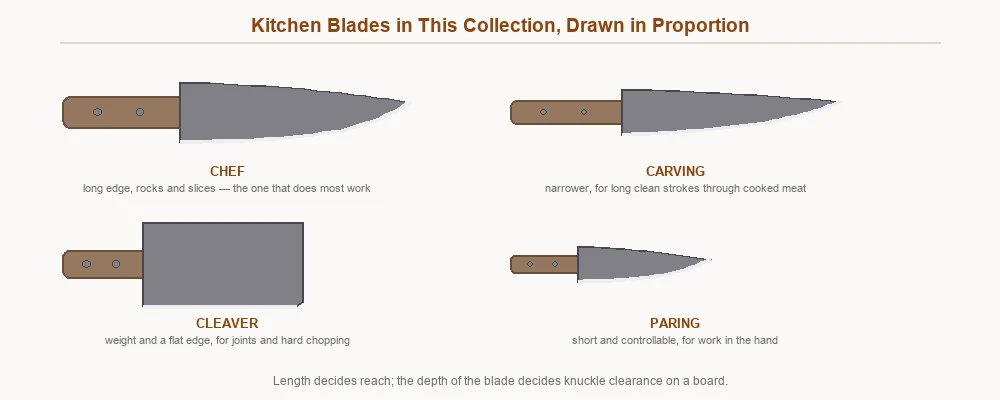
Kitchen knives are separated by geometry far more than by steel. A chef knife and a cleaver made from the same billet by the same hands do completely different work, because one has length and belly and the other has mass and a flat edge.
| Shape | What it is for | What it is bad at |
|---|---|---|
| Chef knife | The one that does most of the work: chopping, slicing, mincing, dicing. Long edge, deep heel for knuckle clearance, belly at the front for rocking | Anything requiring a fine point or work done in the hand |
| Carving / slicer | Long clean strokes through cooked meat, where you want one continuous cut rather than a sawing action | General prep — too narrow and too little belly |
| Cleaver / meat chopper | Joints and small bones. The job is done by weight falling, not by the edge | Anything delicate. It is a wedge with a handle |
| Bull cutter | Breaking down large primal cuts. More reach than a cleaver, more mass than a chef knife | Fine vegetable work |
| Paring | Peeling, trimming and podding, held in the hand rather than used on a board | Anything on a board — too short to be efficient |
Start From the Motion, Not the Knife
The most useful question is not which knife is best, it is how you actually cut. Most people use one or two motions almost exclusively, and the right blade is whichever one is built for those.
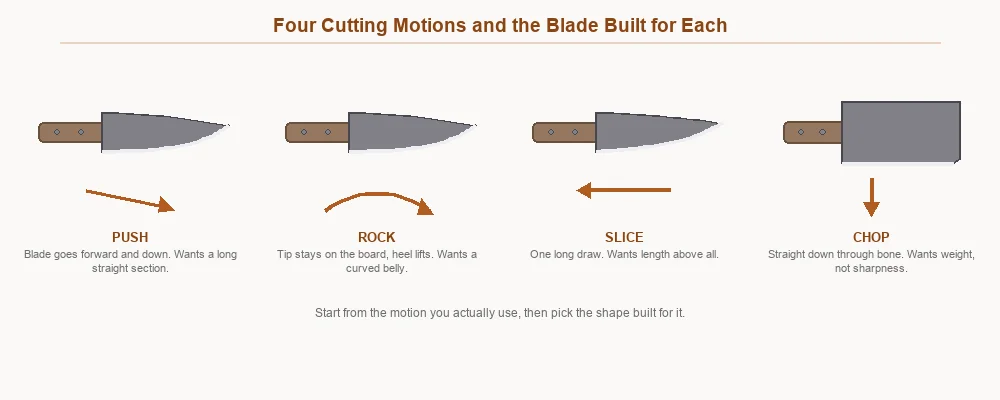
If you rock — tip on the board, heel lifting and falling — you want belly, which means a chef knife. If you push cut, driving the blade forward and down through the food, you want the long straight section behind the belly. If you slice, you want length. If you chop through bone, you want mass and you should stop using your chef knife for it. Our guide to blade profiles by cutting motion goes through each one properly.
Damascus, J2 or D2 in a Kitchen
Three steels appear in this collection and the honest summary is that the differences are small, and none of them is stainless.
Damascus is a construction method, not a steel
Ours is 1095 and 15N20 forge-welded together, folded, drawn out and etched so the two alloys read as light and dark bands. Both are carbon steels. The pattern is genuinely the product of hours of work and it is the reason to buy one — but it does not make the knife cut better or hold an edge longer than the plain carbon blade next to it. Our Damascus vs high carbon guide sets out exactly what the layers do and do not change.
J2 is the sensible working choice
A plain high-carbon steel at the same HRC 58–60. It takes a keen edge, comes back quickly on a stone, and asks for the same drying and oiling as the Damascus. If you want a knife to use rather than to look at, this is where the value is.
D2 lasts longer between sharpenings
A high-chromium tool steel. The chromium is locked into carbides rather than free in solution, so it is not stainless, but it does resist rust noticeably better than the carbon steels and holds an edge longer. The cost is that it is slower and more awkward to sharpen, and generally wants a diamond plate.
| Damascus (1095 + 15N20) | J2 | D2 | |
|---|---|---|---|
| Hardness | HRC 58–60 | HRC 58–60 | HRC 58–60 |
| Rusts? | Yes — dry it | Yes — dry it | Resists, but not stainless |
| Edge holding | Good | Good | Better |
| Sharpening | Easy on any stone | Easy on any stone | Wants a diamond plate |
| Why pick it | The pattern | Best value for daily use | Least frequent maintenance |
Handles
Handle materials here are bone, sheep horn, natural wood, micarta and resin. In a kitchen the practical considerations are different from a field knife: your hands are wet often, and the handle spends its life near heat and detergent.
- Micarta — the most practical. Grippy wet, completely stable, indifferent to humidity.
- Resin — waterproof and dimensionally stable, and it takes colour and pattern that the natural materials cannot.
- Bone and sheep horn — handsome and warm in the hand. They are organic, so keep them out of standing water and oil them occasionally.
- Natural wood — classic and comfortable, and the one that least likes being left wet.
Looking After a Carbon Steel Kitchen Knife
- Hand wash, never the dishwasher. Detergent and heat strip the oil film and attack natural handles.
- Dry it straight away. Not on the rack — with a towel, then put it away.
- Wipe acidic food off as you go. Onion, tomato and citrus will mark a carbon blade within minutes.
- Let a patina form. The grey-blue film that develops with use is a stable oxide and protects the steel. It is not rust.
- Use a wooden or composite board. Glass and stone boards destroy an edge faster than any amount of cutting.
- Hone often, sharpen rarely. Most dull-feeling knives just need realigning.
The full routine is in our knife maintenance guide, and the whetstone sequence is in the step-by-step sharpening guide.
Frequently Asked Questions
Are Damascus kitchen knives dishwasher safe?
No, and neither is anything else in this collection. Our Damascus is 1095 and 15N20, both carbon steels, so a dishwasher will strip the oil, etch the blade and loosen a natural handle. Wash by hand in warm water, dry immediately, and the knife will last a lifetime.
Will a Damascus chef knife rust?
Yes, if you leave it wet. Both steels in the billet are carbon steels, so there is no chromium film protecting the surface. Dry it after every wash and it will develop a grey patina instead, which is a stable oxide layer and actually slows further corrosion. Orange rust is the one to act on.
Is Damascus better than J2 or D2 for a kitchen knife?
Not in performance. All three finish at HRC 58 to 60 and take a comparable edge. Damascus costs more because of the labour in forge-welding and folding the billet, and what you get for it is the pattern. D2 holds its edge a little longer and resists rust better, but is more awkward to sharpen.
What size chef knife should I buy?
For most home kitchens an 8 to 10 inch blade covers nearly everything. Our Bone Handle Chef Knife is 11 inches overall, which puts the blade in that working range. Longer than that and it stops being comfortable on a domestic board.
What is a bull cutter?
A heavy, broad-bladed butcher’s knife for breaking down large cuts of meat. It sits between a chef knife and a cleaver: more reach and belly than a cleaver, considerably more mass than a chef knife.
Cleaver or meat chopper, what is the difference?
In practice they are the same tool under two names in this collection – a heavy rectangular blade whose job is mass rather than sharpness. You use it to go through joints and small bones where a chef knife would chip.
Do the chef sets come with a block or a roll?
The sets ship as the knives themselves, in five and seven piece configurations with matching handles. Check the individual listing for what is included before ordering.
How often should I sharpen a kitchen knife?
Hone it briefly every few uses and it will need actual sharpening only a few times a year in a home kitchen. Most blades that feel dull are not blunt, they are misaligned, and a few passes on a steel or a strop brings them back.
Guides for Choosing a Kitchen Knife
These go deeper on the parts that apply across the whole workshop — steel, geometry, materials and upkeep.
- Blade Profiles by Cutting Motion — push, rock, slice and pierce, and the blade built for each.
- How to Sharpen a Knife: Step-by-Step — the whetstone sequence, the burr, and how to hold the angle.
- Best Knife Type for Every Use Case — why kitchen work wants length and thinness above everything else.
- Complete Knife Maintenance & Care Guide — hand washing, drying and the routine that keeps a carbon blade alive.
- Stainless vs Carbon Steel Knives — chromium, rust, and which family suits a working kitchen.