
Fishing & Camping Knives: What Outdoor Work Actually Demands
This collection holds 20 hand-forged outdoor knives, from $100 to $240 — camp knives, skinners, gut hooks, karambits and a large bowie. Every one is finished at HRC 58–60 and supplied with a leather sheath. Thirteen are full tang and seven are hidden tang — each listing states which.
Outdoor knives get judged on the wrong things. The pattern on the blade will not matter to you at six in the morning on a wet riverbank; whether the handle stays in your hand will. Grip when wet and full tang construction are the two decisions worth making carefully.
Which Knife for Which Conditions
| What you are doing | What matters most | From this collection |
|---|---|---|
| Fishing, boat or riverbank | A handle that grips soaking wet | J2 11 in with green micarta at $140 |
| General camp work | Full tang, robust handle, no fuss | Damascus Camping Knife, ashwood at $110 Damascus camp skinner, wenge wood at $130 |
| Processing what you catch or shoot | Belly for skinning, controllable point | Fishing & Camping Skinner at $115 Gut Hook Skinner, bull horn at $115 |
| Least maintenance in salt and damp | D2 rather than a carbon steel | D2 Hunting Dagger, sheep horn at $110 |
| Everyday outdoor carry | Small, light, easy to keep on you | EDC Damascus Skinner at $105 |
| Reach and chopping in camp | Length and mass | J2 bowie, bull horn and resin at $240 |
| Something different | Reverse grip, ring, pulling cut | Karambit for outdoor use, J2 at $195 Rail Steel Knife, hand forged at $145 |
The Collection
All 20 knives, with prices.
-
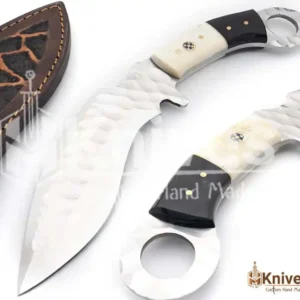
Bone Karambit Knife — Full Tang, Genuine Horn and Bone Handle
$195.00 -
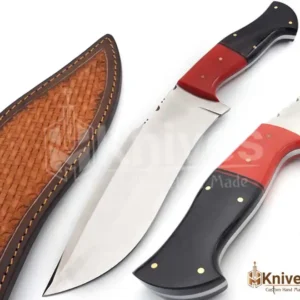
Bowie Knife — J2 Steel, Bull Horn and Resin Handle
$240.00 -
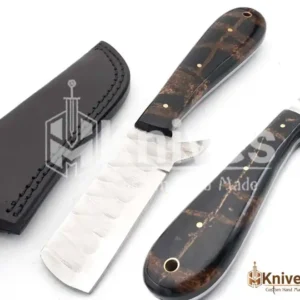
Bull Cutter Knife — Full Tang J2 Steel with Resin Handle
$135.00 -
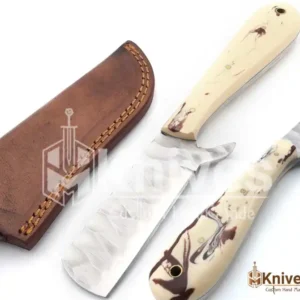
Bull Cutter Knife — Patterned Resin Handle, J2 Steel
$135.00 -
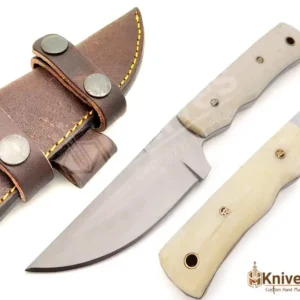
D2 Skinning Knife — Full Tang with Bone Handle
$110.00 -
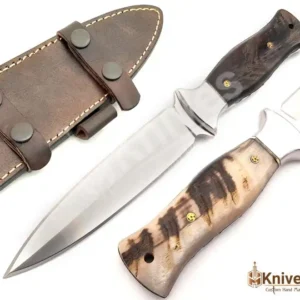
D2 Steel Hunting Dagger Knife with Sheep Horn Handle
$110.00 -
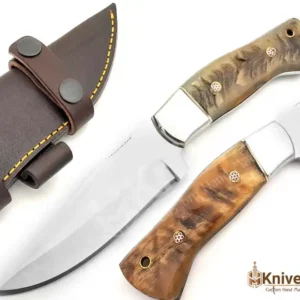
D2 Steel Kitchen Knife — Full Tang with Sheep Horn Handle
$110.00 -
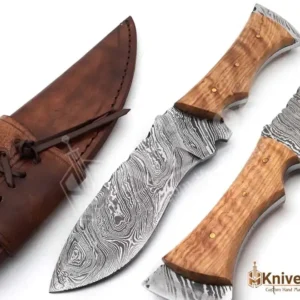
Damascus Camping Knife — Full Tang, Ashwood Handle
$110.00 -
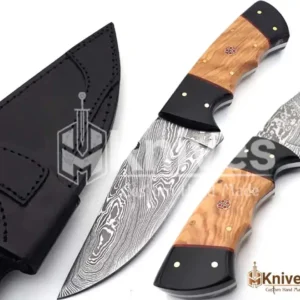
Damascus Fishing & Camping Skinner Knife — Bull Horn and Ashwood Handle
$115.00 -
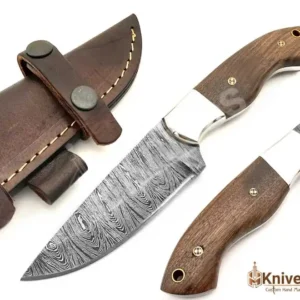
Damascus Skinner Knife — 9 Inch, Natural Wood Handle
$100.00 -
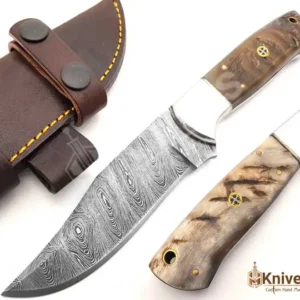
Damascus Skinner Knife — Sheep Horn Handle with Mosaic Pin Detail
$110.00 -
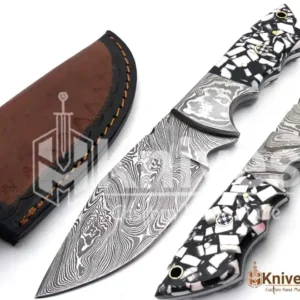
EDC Damascus Skinner Knife — Hand-Engraved Sheath, Two-Tone Handle
$105.00 -
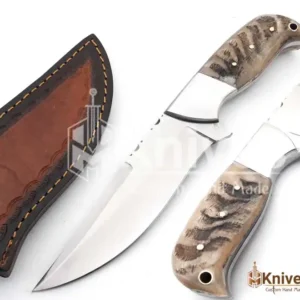
Full Tang Skinner Knife — J2 Steel with Sheep Horn Handle
$125.00 -
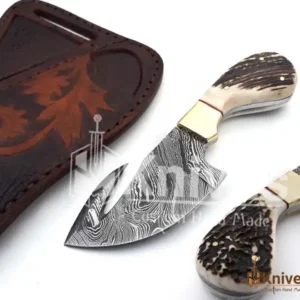
Gut Hook Hunting Knife — Damascus Blade with Stag Handle
$165.00 -
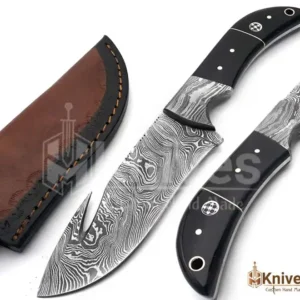
Gut Hook Skinning Knife — Damascus Blade, Bull Horn Handle
$115.00 -
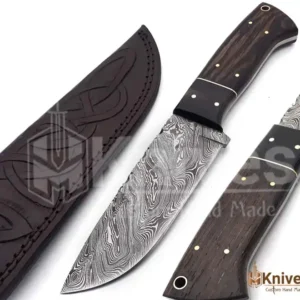
Hand Made Damascus Steel Camping Skinner Knife with Wenge Wood Handle
$130.00 -
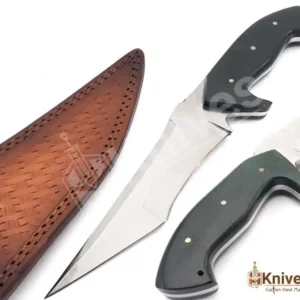
J2 Steel 11 inch Hand Made Fishing Camping Knife with Green Micarta Handle
$140.00 -
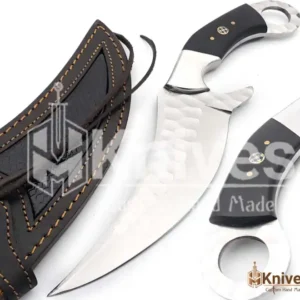
Karambit Knife for Outdoor Use — J2 Steel, Full Tang
$195.00 -
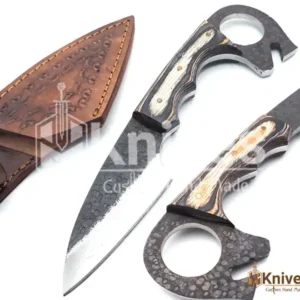
Rail Steel Knife — Hand Forged, Full Tang
$145.00 -
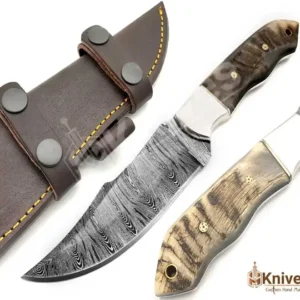
Sheep Skinner Knife — Damascus Blade with Sheep Horn Handle
$100.00
Grip When Wet Is the Whole Game
If you take one thing from this page, take this. Every other property of an outdoor knife degrades gracefully. Grip does not: either the handle stays in your hand or it does not, and it fails exactly when the consequences are worst.
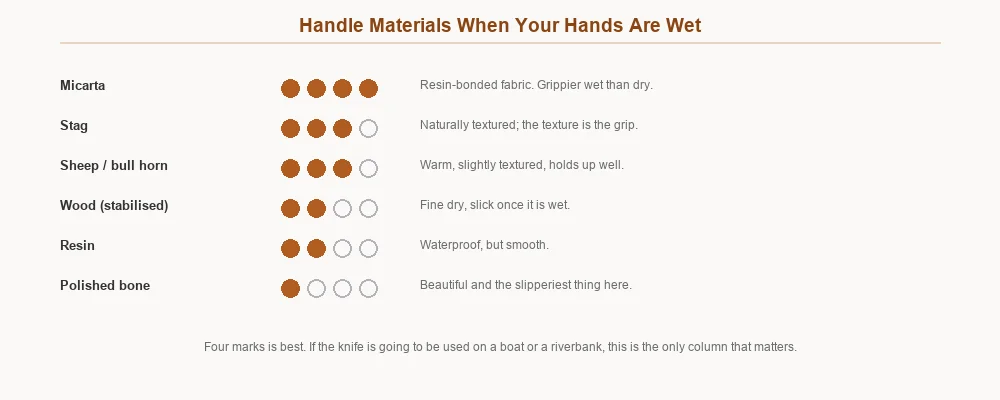
Micarta wins because the resin-bonded fabric has texture right through it and gets grippier as it wets. Stag and horn are good for the same reason — the texture is the material. Polished bone is beautiful and is the worst thing on this list to hold with wet hands. If the knife is going to be used hard outdoors, choose on this basis and treat the rest as decoration. Our materials guide covers each in depth.
Flex: A Feature on One Knife, a Fault on Another
A point of confusion worth clearing up, because “fishing knife” and “camp knife” describe opposite tools.
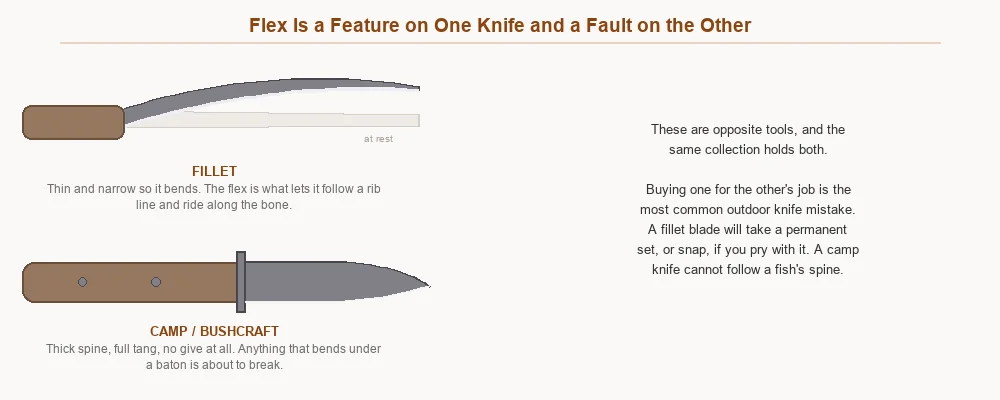
A true fillet knife is thin, narrow and deliberately flexible, so it can follow a rib line and ride along the bone. A camp or bushcraft knife is the opposite: thick spine, full tang, no give whatsoever, because anything that flexes under a baton is about to fail. Nothing in this collection is a fillet knife — these are all rigid fixed blades. If you genuinely need flex, buy a dedicated fillet knife rather than expecting one of these to do it.
Steel in the Wet
Three steels here, all at HRC 58–60, and the difference that matters outdoors is corrosion rather than edge holding.
| Damascus (1095 + 15N20) | J2 | D2 | |
|---|---|---|---|
| Corrosion outdoors | Rusts readily — oil it | Rusts readily — oil it | Noticeably more resistant, but not stainless |
| Salt water | Rinse and dry the same day | Rinse and dry the same day | More forgiving, still rinse it |
| Edge holding | Good | Good | Better |
| Sharpening in the field | Easy on any stone | Easy on any stone | Awkward — wants a diamond plate |
| Why pick it | The pattern | Best value | Least maintenance |
Our Damascus is 1095 and 15N20 forge-welded together — both carbon steels. It is bought for the pattern, and the pattern is genuinely hours of work, but it buys you nothing against weather. Our stainless vs carbon guide explains what chromium actually does and why none of these are stainless.
Care After a Wet Day
- Rinse in fresh water if it has been near salt, the same day, without exception.
- Dry it completely, including the seam where handle meets tang, which is where water sits.
- Oil the blade before it goes away. Mineral or camellia oil, wiped on thin.
- Store it out of the sheath. Leather is the worst place to keep a carbon blade.
- Let the patina form. The grey film on a used carbon blade is a stable oxide and protects it. Orange rust is the one to deal with.
- Dry natural handles slowly, away from direct heat, or they crack.
Frequently Asked Questions
What should I look for in a knife for fishing and camping?
Two things above all: a handle that grips when it is wet, and construction suited to the work. Full tang is the stronger choice if you intend to baton or pry; for cutting and filleting a hidden tang is perfectly sound. Each listing states which you are getting. Everything else – steel, pattern, handle material – is preference. Wet hands are the defining condition of outdoor work and most buyers underweight it.
Which handle material is best for wet hands?
Micarta, comfortably. It is resin-bonded fabric and it actually gets grippier as it gets wet. Stag and horn are good because they are naturally textured. Polished bone is the worst of the group when wet, however good it looks dry.
Do you sell a fillet knife?
Not currently. A true fillet knife is a thin, narrow, deliberately flexible blade, and nothing in this collection is built that way – these are rigid full tang knives. If you specifically need flex to follow a rib line, buy a dedicated fillet knife.
Will a carbon steel knife survive saltwater?
Only if you look after it. Salt accelerates corrosion dramatically. Rinse the blade in fresh water the same day, dry it completely, and oil it before it goes away. If you fish in salt often, the D2 blades here are the more forgiving choice.
Is Damascus a good choice for outdoor use?
It works, but understand what you are buying. Our Damascus is 1095 and 15N20, both carbon steels, so it rusts exactly like plain carbon. It is bought for the pattern, not for weather resistance.
What is a rail steel knife?
A blade forged from reclaimed rail steel. It is a high-carbon steel with a story attached, and it behaves like other carbon steels: takes a good edge, needs oiling.
Can I baton with these knives?
The full tang camp knives here will take light batoning through small wood. No knife enjoys it, and a knife is never as good at splitting as a small axe. If you split wood regularly, buy a hatchet and stop abusing your knife.
How do I stop the sheath damaging the blade?
Do not store the knife in it. Leather holds moisture against steel and is tanned with salts that corrode carbon blades. The sheath is for carrying; store the knife dry and oiled, out of the leather.
Guides for Choosing an Outdoor Knife
These go deeper on the parts that apply across the whole workshop — steel, geometry, materials and upkeep.
- Stainless vs Carbon Steel Knives — saltwater, humidity and the real cost of carbon steel outdoors.
- Best Knife Type for Every Use Case — why camping wants a full tang and fishing wants flex.
- Knife Materials Compared — handle materials that keep grip when wet.
- Complete Knife Maintenance & Care Guide — drying, oiling and sheath storage for blades that get soaked.
- Knife Steel Types and How They Perform — what 1095, 15N20, J2 and D2 do differently in the field.