
Folding Pocket Knives

Folding Knives: Lock Types, EDC Buying Guide & Our Handmade Damascus Collection

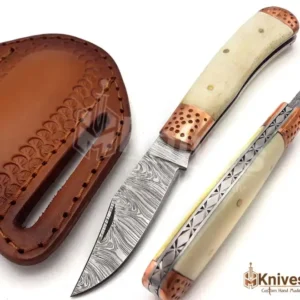
A folding knife — also called a pocket knife — is a bladed tool with a pivot mechanism that rotates the blade into the handle scales for safe pocket carry. The blade deploys via a thumb stud, flipper, or bail and locks in the open position through a liner lock, frame lock, lockback, or slip joint. A folding knife is a distinct entity from a fixed-blade knife: a fixed-blade knife carries no pivot, no locking system, and no folding geometry — blade and tang form a single rigid unit from tip to pommel.

Everyday carry (EDC) describes the practice of carrying a compact, functional tool on your person daily for utility tasks including cord cutting, food preparation, box opening, and general-purpose cutting in professional and outdoor environments. A damascus pocket knife or J2 steel folding knife serves as the EDC tool of choice for buyers who require a bladed instrument with legal pocket carry geometry, confirmed locking mechanism, and a blade length within the 3.0- to 3.5-inch EDC-appropriate range.

SignalDetail
HANDMADEEvery folding knife is forged and assembled by hand — no factory production and no machine stamping.
STEELTwo blade steels available: Damascus pattern-welded (HRC 58–60) and J2 high-carbon stainless (HRC 56–58).
COLLECTION5 EDC folding knife models — liner lock and frame lock variants with Damascus and J2 blade options.
ENGRAVINGCustom blade and handle engraving available on all models for personalized EDC or gift purchase.
SHIPPINGShips worldwide: UAE Canada USA UK and all international destinations. UAE delivery: 7–14 days.
PACKAGINGEvery gift folding knife ships in branded gift packaging at no additional cost. Gift orders welcomed.

Every handmade folding knife for sale in this collection delivers a Damascus or J2 steel blade, a confirmed locking mechanism, custom engraving on request, and worldwide delivery to the UAE and all international destinations.

Our Custom Made Folding Pocket Knives Collection

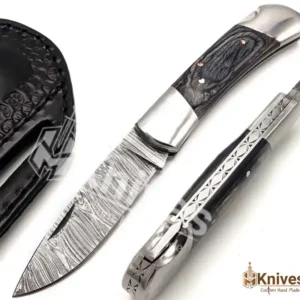
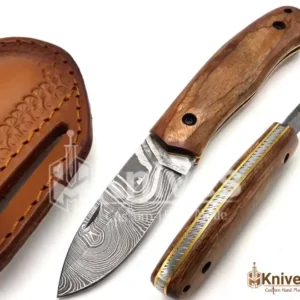
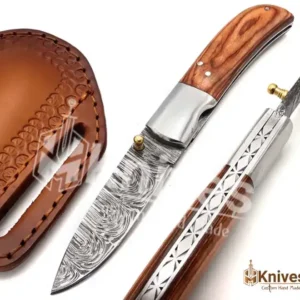
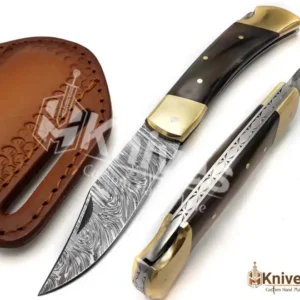
HM Knives produces custom handmade folding knives for sale in Damascus pattern-welded steel and J2 high-carbon stainless. Each product card below specifies blade steel, lock mechanism type, blade length, handle material, and primary edc knife for sale use case. Custom engraving is available on all models. Damascus folding knives ship with branded gift packaging worldwide.

What Are the Different Types of Folding Knives?

Slip Joint Folding Knife

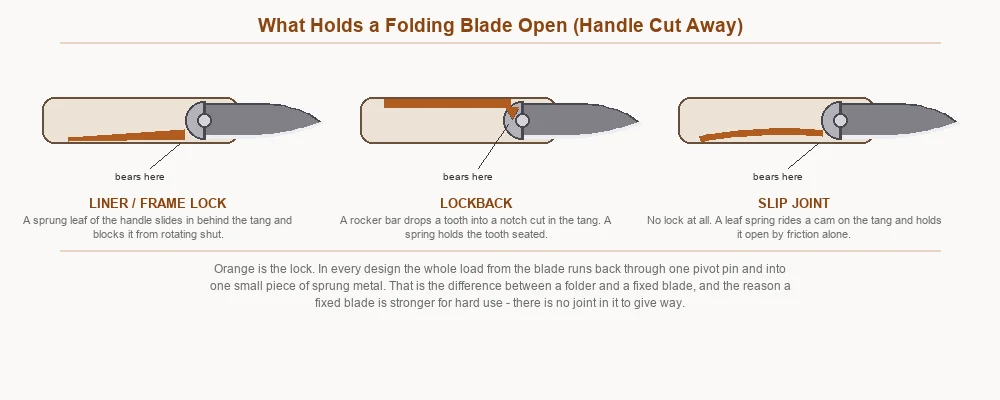
A slip joint knife holds the blade open through spring tension — no mechanical lock engages the tang. The blade closes when downward pressure overcomes spring resistance at the pivot. Slip joint knives carry no locking mechanism, making them legal to carry in a greater number of restrictive jurisdictions than locked-blade designs. Traditional pocketknife and penknife designs use slip joint mechanisms. Best suited for light utility tasks, gift purchases, and carry in blade-length-restricted regions.

Liner Lock Folding Knife

A liner lock knife uses a spring-steel liner inside the handle that flexes laterally to brace behind the blade tang when the blade reaches full deployment. The liner holds the blade in the open position under direct lateral load. To close, the carrier pushes the liner sideways to disengage and folds the blade into the handle scales. Liner locks are the most common EDC locking mechanism — lightweight, reliable, and suited for daily carry tasks at blade lengths of 2.8 to 3.5 inches.

Frame Lock Folding Knife

A frame lock knife uses the handle frame itself — not an internal liner — as the locking element. A section of the handle frame flexes inward behind the blade tang to hold the blade in the open position. Frame locks produce greater lockup strength than liner locks because the locking bar carries greater mass and surface contact area. Best suited for EDC users who prioritize structural rigidity, one-hand operation, and heavier-duty utility tasks.

Lockback Folding Knife

A lockback knife uses a rocker mechanism at the spine of the handle — a pivoting bar drops into a notch on the blade tang to lock the blade in the deployed position. Releasing the lock requires pressing a spine button while simultaneously folding the blade. Lockback mechanisms provide strong, reliable engagement and resist accidental closure under blade torque or grip pressure. Best suited for heavy-duty utility carry, outdoor use, and buyers preferring spine-release geometry over side-push disengagement.

Assisted-Opening Folding Knife

An assisted-opening folding knife uses an internal spring mechanism that accelerates blade deployment once the carrier partially opens the blade via thumb stud or flipper. The blade does not open automatically — the carrier initiates deployment. Several US states and international jurisdictions classify assisted-opening knives separately from manual-open folding knives — in some regions, assisted-opening knives fall under switchblade statutes regardless of blade length. Verify local carry regulations before purchasing an assisted-opening model for everyday carry.

How to Choose the Best EDC Knife?

Folding knife selection for everyday carry depends on four measurable criteria: blade length relative to applicable carry laws, handle size for pocket fit, clip orientation for deployment speed, and blade steel for low-maintenance daily use. Each criterion maps to a specific specification range that separates a purpose-built best edc knife from a general-purpose folding knife.

Blade Length for Legal Everyday Carry

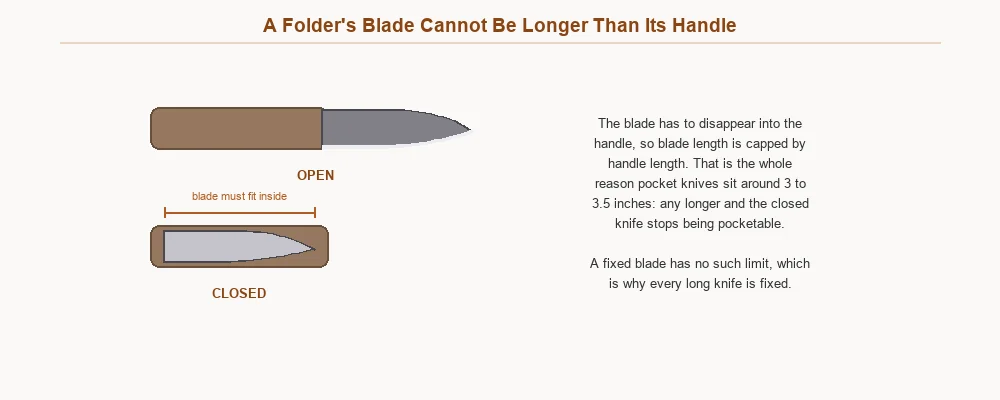
Blade length is the primary selection criterion for everyday carry because it directly determines legality in most jurisdictions. US knife law discussions reference a 3.0- to 3.5-inch threshold as the range below which folding knife carry is treated less restrictively in a greater number of states. Blades at or below 3.0 inches qualify as legal carry in the largest number of US jurisdictions. HM Knives folding knife blades range from 2.8 to 3.5 inches, within the general EDC-appropriate range. Buyers must verify applicable local laws before carry.

Handle Size and Pocket Fit

Handle length determines pocket carry comfort and grip adequacy. A handle between 4.0 and 4.5 inches provides four-finger grip for operational control and fits in a standard front pocket without visible printing. Handles shorter than 4.0 inches reduce grip surface; handles longer than 5.0 inches become difficult to pocket-carry without printing through fabric. HM Knives folding knife handles range from 4.0 to 4.5 inches — sized for full-grip pocket carry.

Lock TypeHow It WorksSafety LevelLegal Status NoteBest Use Case
Slip JointSpring tension holds the blade open — no mechanical lock engages the tang. Closes when downward pressure overcomes spring resistance.Low — no lock engagesPermitted in the greatest number of restrictive jurisdictions. No locking mechanism to classify.Light utility tasks; gift purchases; carry in blade-length-restricted regions.
Liner LockA spring-steel liner inside the handle flexes laterally to brace behind the blade tang at full deployment. Push liner sideways to close.High — liner braces under direct lateral loadStandard folding knife classification in most jurisdictions. Not subject to switchblade statutes.Everyday carry (EDC); daily utility tasks; blade lengths 2.8–3.5 inches.
Frame LockThe handle frame itself flexes inward behind the blade tang to lock the blade open. Greater mass and contact area than a liner.Very High — frame carries greater locking strengthStandard folding knife classification in most jurisdictions.Heavy-duty EDC; one-hand operation; buyers prioritizing structural rigidity.
LockbackA rocker mechanism at the handle spine drops into a notch on the blade tang. Spine button releases the lock.High — resists accidental closure under torqueStandard folding knife classification in most jurisdictions.Outdoor carry; heavy utility; buyers preferring spine-release over side-push.
Assisted-OpeningInternal spring accelerates blade deployment once the carrier initiates opening via thumb stud or flipper. Not automatic — carrier must start deployment.High when deployedSeveral US states and international jurisdictions classify assisted-opening under switchblade statutes. Verify local law before purchase.Fast-deployment EDC where legally permitted.

Are Folding Knives Legal to Carry?

Folding knife carry legality depends on jurisdiction. Blade length, lock type, opening mechanism, and carry context — concealed versus open — each affect whether a knife is legal to carry in a given location. Laws vary between countries, US states, Canadian provinces, and individual municipalities. No single answer applies universally.

Blade Length Thresholds in Knife Carry Law

US knife law discussions frequently reference a 3.0- to 3.5-inch blade length as a general threshold in restrictive jurisdictions. Some jurisdictions cite 2.5 inches; others permit blades of 4 inches or longer. Blade length laws in most cases apply to carry, not ownership — a knife legal to own may not be legal to carry concealed in the same jurisdiction. Open carry and concealed carry are treated differently in several US states. Buyers must verify the specific statutes applicable to their location for both carry mode and blade length.

Manual-Open vs. Assisted-Opening Knife Legal Status

Manual-open folding knives — opened by thumb stud, nail nick, or flipper that requires direct blade manipulation — and assisted-opening knives — opened by an internal spring mechanism that accelerates deployment once partially initiated — face different legal treatment in several jurisdictions. Some US states and international countries classify assisted-opening knives under switchblade or gravity-knife statutes regardless of blade length. Manual-open folding knives face fewer automatic restrictions in the same jurisdictions. Buyers must verify local statutes before purchasing an assisted-opening model for carry.

HM Knives Legal Notice

HM Knives does not provide legal advice. Blade length laws, lock type restrictions, assisted-opening knife classifications, and carry statutes vary by jurisdiction and change over time. Buyers must verify the laws applicable to their location — covering ownership, carry, and transport — before purchasing any folding knife and before carrying it outside the home. For US knife law research, the American Knife & Tool Institute (AKTI) maintains a state-by-state knife law resource at akti.org.

Damascus vs. J2 Steel: Which Is Better for a Folding Knife?

Damascus and J2 steel perform differently in folding knife applications than in fixed-blade applications. A folding knife blade cycles through the pivot 100 to 300 times per year in daily carry — pivot wear, thin blade geometry near the tang, and continuous sweat contact create conditions absent from sheathed fixed-blade carry.

Damascus Steel for Folding Knives

Damascus steel in a folding knife cycles through the pivot 100 to 300 times per year in daily carry conditions. At HRC 58–60, Damascus holds a 15- to 20-degree EDC edge for 4 to 6 weeks of light tasks — cord cutting, food preparation, packaging — before resharpening. Pocket carry accelerates oxidation: sweat and humidity contact the blade surfaces daily. Apply camellia oil or mineral oil to both blade faces weekly to manage surface patina in daily carry.

J2 Steel for Folding Knives

J2 high-carbon stainless steel at HRC 56–58 provides superior corrosion resistance for daily carry in humid and sweat-contact environments. J2 steel requires no weekly oiling — the chromium content in the J2 alloy resists oxidation without surface treatment in pocket carry conditions. Edge retention for light EDC tasks — cord cutting, packaging, food preparation — matches Damascus at 4 to 6 weeks between sharpenings at a 15- to 20-degree angle per side.

AttributeDamascus (HRC 58–60)J2 Stainless (HRC 56–58)Recommendation
Corrosion resistanceModerate — weekly oiling requiredHigh — no weekly oiling neededJ2 for humid climates and daily sweat-contact carry.
Edge retention (EDC)4–6 weeks at 15–20° bevel per side4–6 weeks at 15–20° bevel per sideEqual for light EDC tasks: cord cutting and packaging.
Pivot wear resistanceHigh — harder steel at tangModerate — softer tang geometryDamascus for longevity across 100–300 pivot cycles per year.
Pocket carry maintenanceWeekly blade oiling with camellia or mineral oilMonthly pivot cleaning only — no blade oiling requiredJ2 for lowest-maintenance daily carry.
Visual appearanceHand-forged Damascus acid-etch pattern — visible layer linesUniform satin or bead-blast finishDamascus for collectors and gift purchases.
Resharpening interval4–6 weeks for light EDC tasks4–6 weeks for light EDC tasksEqual resharpening frequency at same bevel angle.
Price rangeFrom $75From $65J2 for budget EDC; Damascus for collector and gift purchase.

Which Folding Knife Suits Your Carry Purpose?

CriterionRecommended SpecificationHM Knives RangeWhy It Matters
Blade length (legal EDC)3.0–3.5 inches in most US jurisdictions — verify local law2.8–3.5 inchesPrimary carry legality factor in restrictive jurisdictions.
Handle length (pocket fit)4.0–5.0 inches for full-grip pocket carry4.0–4.5 inchesHandles under 4.0 inches reduce grip; over 5.0 inches print through fabric.
Lock type (EDC)Liner lock or frame lock for one-hand operationBoth availableLiner lock: lightweight EDC. Frame lock: heavier-duty utility.
Blade steel (low maintenance)J2 stainless for humid climates; Damascus for collectorsBoth availableJ2 requires no weekly blade oiling. Damascus requires weekly oiling in pocket carry.
Total knife weightUnder 4 oz (113g)Model dependentPocket carry comfort threshold for all-day EDC.
Sharpening angle15–20 degrees per sideBoth steels: 15–20 degreesCorrect EDC bevel angle for both Damascus and J2 in folding knife geometry.
Clip orientationTip-up for fastest one-hand deploymentModel dependentTip-up clip positions blade tip at pocket opening for immediate deployment.

How Do You Maintain a Folding Knife?

Clean the Pivot and Mechanism Every 30 Days

Lint, pocket debris, and particulate matter accumulate in the pivot mechanism of a pocket knife within 30 days of daily carry. Pivot debris accelerates wear on the pivot pin and reduces blade deployment smoothness. Open the blade fully and use a wooden toothpick to extract debris from the pivot area without scratching the handle scales.

Flush the pivot channel with 1 to 2 drops of isopropyl alcohol — do not use water, which causes internal corrosion on the steel pivot pin. Wait 5 minutes for the alcohol to evaporate fully before applying pivot lubricant. Apply one drop of lightweight machine oil or dedicated knife pivot oil directly to the pivot point. Open and close the blade 10 times to distribute lubricant through the mechanism.

Oil a Damascus Folding Knife Blade Weekly

Damascus steel in pocket carry contacts sweat, skin oils, and ambient humidity daily — the three primary oxidation vectors in everyday carry conditions. Surface patina forms faster on Damascus than on J2 stainless because Damascus steel contains no chromium passivation layer. Apply 2 to 3 drops of camellia oil, mineral oil, or food-safe knife oil to both blade faces using a clean lint-free cloth.

Spread the oil along the Damascus pattern lines with light circular strokes. Wipe off excess oil before returning the knife to pocket carry — residual oil attracts lint and debris that accelerate pivot wear and contaminate the locking mechanism. J2 stainless folding knives require pivot cleaning only — blade oiling is not necessary for J2 steel in standard carry conditions.

Sharpen a Folding Knife Blade at 15 to 20 Degrees per Side

Sharpening a folding knife requires the blade deployed and locked fully open during the entire sharpening process. Sharpening with the blade partially closed places handle scales against the whetstone — an incorrect geometry that produces an uneven bevel and creates a hand injury risk.

Position a whetstone flat on a stable surface. Maintain a 15- to 20-degree angle per side — the correct EDC sharpening geometry for both Damascus and J2 steel blades in folding knife applications. Complete 8 to 10 strokes per side on a 1,000-grit whetstone for edge repair, then 6 to 8 strokes per side on a 2,000-grit finish stone to refine the edge. Strop on leather 5 times per side to align the final edge apex.

HM Knives produces every folding knife by hand — no factory production, no machine stamping, no outsourced blade grinding. Blade steels: Damascus pattern-welded at HRC 58–60 and J2 high-carbon stainless at HRC 56–58. Custom engraving on blade and handle is available on all models.

Ships worldwide: UAE, Canada, USA, UK, Australia, and all international destinations. UAE delivery: 7 to 14 business days. Standard international shipping: 10 to 18 business days. Tracking provided on all orders.

Scroll to Top