
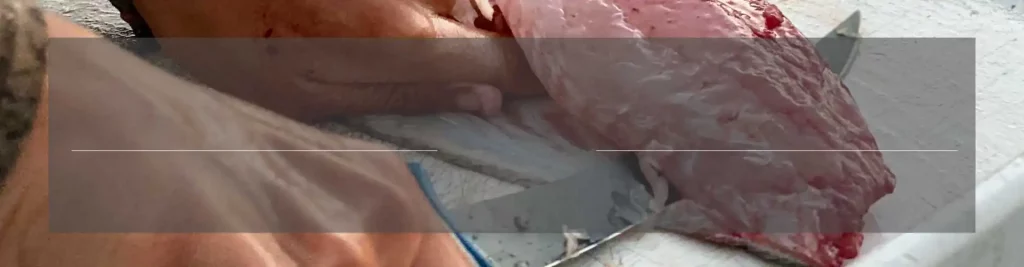
Skinner Knives: Why the Belly Matters and Which One to Buy
This collection holds 18 hand-forged skinners and short field knives, from $95 to $165. Every one is 8 to 9 inches overall, finished at HRC 58–60, and supplied with a leather sheath. Six are full tang and twelve are hidden or half tang — each listing states which.
A skinner is a specialist. It is short on purpose and curved on purpose, and both of those choices are about control against hide rather than about doing more jobs. If you want one knife for everything, this is the wrong collection — look at the hunting knives instead.
Which Skinner for Which Work
| What you are doing | What to look for | From this collection |
|---|---|---|
| Skinning and caping, first knife | Deep belly, 8–9 in, grippy handle | Sheep Skinner, Damascus and sheep horn at $100 9 in Damascus, natural wood at $100 |
| Field dressing without dipping the point | A gut hook on the spine | Gut Hook Skinner, bull horn at $115 Gut Hook, Damascus and stag at $165 |
| A knife that takes rough treatment | Thicker spine, less flex | Heavier 4mm Damascus skinner at $95 |
| Least maintenance in wet conditions | D2 rather than a carbon steel | D2 Skinning Knife, bone handle at $110 |
| Best value working skinner | J2, full tang, plain finish | Full Tang Skinner, J2 and sheep horn at $125 |
| Something with a bit of character | Mosaic pins, matched sheath, coloured handle | Mosaic pin, bone handle at $95 All-black Damascus, matching sheath at $95 Pink Damascus, brass-guarded resin at $95 |
The Collection
All 18 knives, with prices.
-
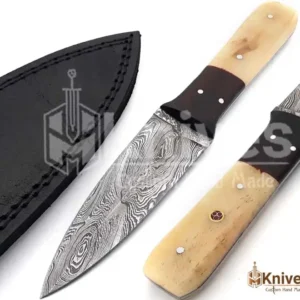
8 Inch Damascus Dagger — Hand Forged with Bone Handle
$95.00 -
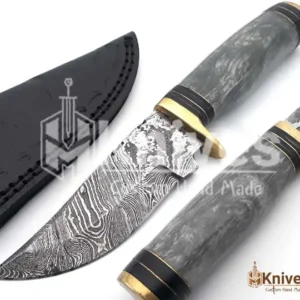
All-Black Damascus Skinner Knife — Matching Sheath and Handle
$95.00 -
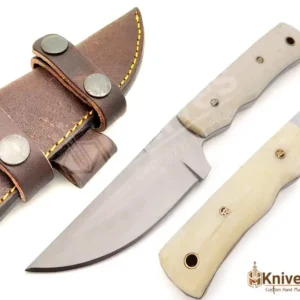
D2 Skinning Knife — Full Tang with Bone Handle
$110.00 -
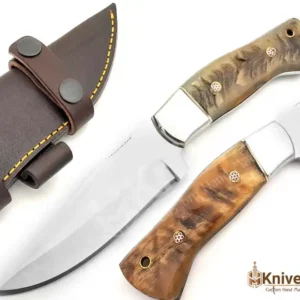
D2 Steel Kitchen Knife — Full Tang with Sheep Horn Handle
$110.00 -
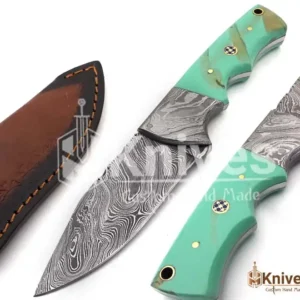
Damascus Bolster Skinner Knife — Sea Green Handle
$105.00 -
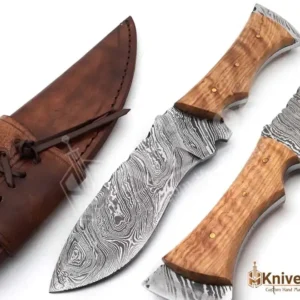
Damascus Camping Knife — Full Tang, Ashwood Handle
$110.00 -
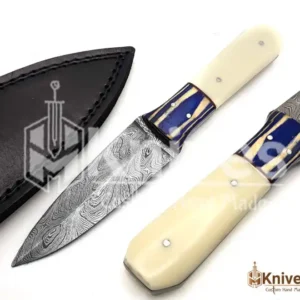
Damascus Dagger Knife with Sheath — Bone Handle, Full Tang
$95.00 -
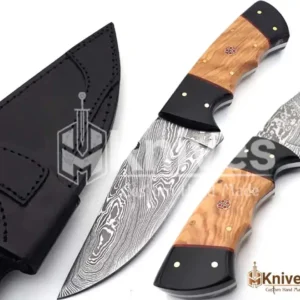
Damascus Fishing & Camping Skinner Knife — Bull Horn and Ashwood Handle
$115.00 -
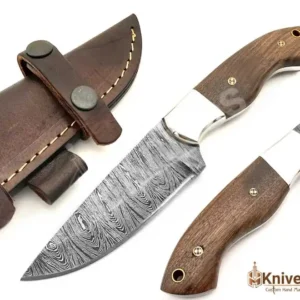
Damascus Skinner Knife — 9 Inch, Natural Wood Handle
$100.00 -
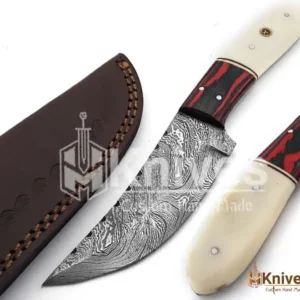
Damascus Skinner Knife — Bone Handle with Mosaic Pin Detail
$95.00 -
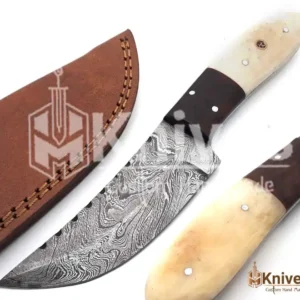
Damascus Skinner Knife — Heavier 4mm Blade, Bone Handle
$95.00 -
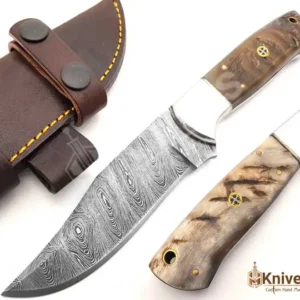
Damascus Skinner Knife — Sheep Horn Handle with Mosaic Pin Detail
$110.00 -
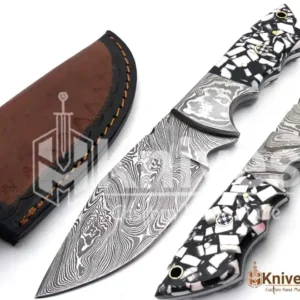
EDC Damascus Skinner Knife — Hand-Engraved Sheath, Two-Tone Handle
$105.00 -
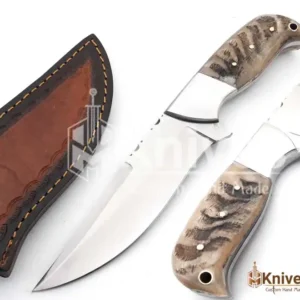
Full Tang Skinner Knife — J2 Steel with Sheep Horn Handle
$125.00 -
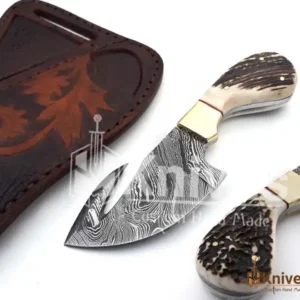
Gut Hook Hunting Knife — Damascus Blade with Stag Handle
$165.00 -
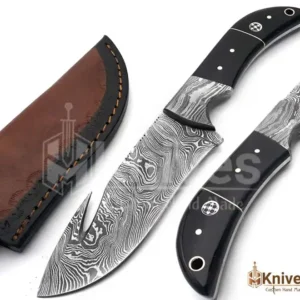
Gut Hook Skinning Knife — Damascus Blade, Bull Horn Handle
$115.00 -
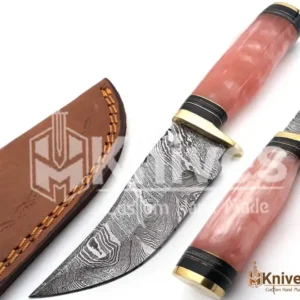
Pink Damascus Knife — Handmade Skinner with Brass-Guarded Resin Handle
$95.00 -
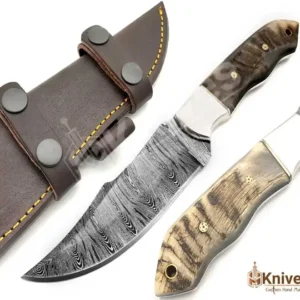
Sheep Skinner Knife — Damascus Blade with Sheep Horn Handle
$100.00
Why a Skinner Has Belly
This is the whole reason the shape exists, and it is worth understanding before you choose between blades.
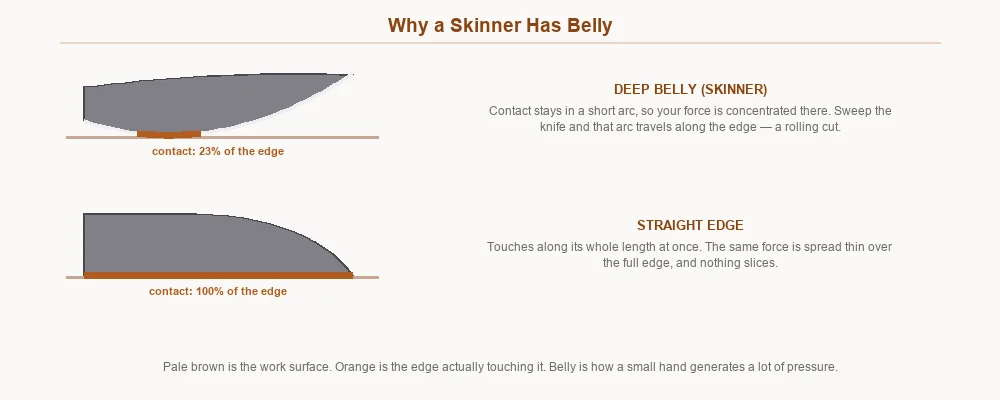
Press a straight edge against something and it lies along its whole length, so whatever force your hand supplies is divided across all of it. Press a bellied edge against the same surface and only a short arc makes contact, so the same force is concentrated into a fraction of the length. That is far more pressure for the same effort.
Then you sweep the knife, and the contact arc travels along the edge. That travelling contact is what people mean by a rolling cut, and it is what separates hide from muscle cleanly instead of tearing at it. A deep belly is not styling — it is the mechanism.
Short on Purpose
Every skinner in this collection is 8 to 9 inches overall. That is not a limitation, it is the specification.
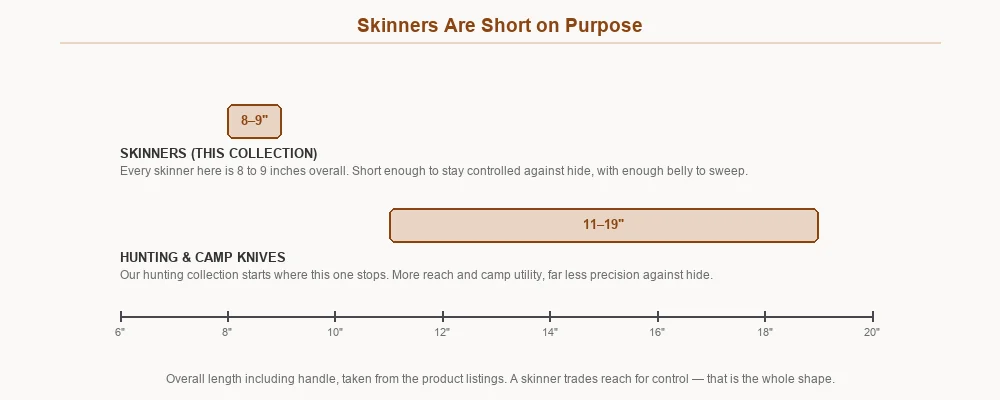
A short blade keeps the tip close to your hand, which is what lets you work against hide without pushing through into the meat. The moment a blade gets long enough to be useful for camp chores it becomes clumsy for this job. That is why a skinner and a hunting knife are two knives rather than one compromise.
Blade Types in This Collection
| Type | What it does | Who it suits |
|---|---|---|
| Skinner | Deep upswept belly, controllable point. The default for separating hide | Anyone processing game. The right first choice |
| Gut hook skinner | Adds a sharpened notch in the spine for opening the abdominal wall without the point entering the cavity | Anyone who field dresses regularly and wants the job faster |
| Bolster skinner | A steel bolster between blade and handle adds weight forward and a positive finger stop | People who like a knife that feels planted in the hand |
| Heavier 4mm blade | Thicker spine, much stiffer, less prone to flex against a joint | Hard use, and anyone who has flexed a thin blade and disliked it |
| Dagger-profile blades | Symmetrical and mostly point, with far less belly | Collectors and display. Not the shape to choose for skinning |
Damascus, J2 or D2
Three steels, all finished at HRC 58–60, and none of them stainless.
| Damascus (1095 + 15N20) | J2 | D2 | |
|---|---|---|---|
| Rusts? | Yes — oil it | Yes — oil it | Resists, but not stainless |
| Edge holding | Good | Good | Better |
| Sharpening | Easy on any stone | Easy on any stone | Wants a diamond plate |
| Why pick it | The pattern | Best value for working use | Least maintenance in the wet |
Our Damascus is 1095 and 15N20 forge-welded together, folded, drawn and etched. Both are carbon steels, so the pattern comes with the same rust behaviour as plain carbon. It is a genuine reason to buy — the pattern is hours of work — but it is not an edge-retention feature. Our steel types guide compares all three properly.
Handles
Handle materials here are bone, sheep horn, bull horn, resin, natural wood and wenge. For a knife used on an animal, grip when wet is the only property that really matters, and polished bone is the weakest performer on that measure however good it looks. Our materials guide compares them all.
Care After Field Use
- Clean it as soon as you reasonably can. Blood and stomach contents are acidic and will etch a carbon blade if left on it.
- Dry it completely, including where the handle meets the tang.
- Oil the blade before it goes away. A wiped-on film is enough.
- Never store it in the sheath. Leather holds moisture and is tanned with salts.
- Gut hooks need a round file or tapered rod, not a flat stone.
- Oil horn and bone handles occasionally — they are organic and dry out over years.
Frequently Asked Questions
What makes a skinner different from a hunting knife?
Belly and length. A skinner has a deep upswept curve to the edge and is short – every one here is 8 to 9 inches overall. A general hunting knife is longer, straighter and more of a camp tool. The skinner gives up reach to gain control against hide.
Why does a skinner have such a curved edge?
Because a curved edge concentrates your force. Pressed against a surface, a bellied blade contacts in a short arc while a straight edge lies along its whole length and spreads the same force thin. Sweep the knife and that contact arc travels along the edge, which is what a rolling cut is.
What is a gut hook for?
It is a sharpened semicircular notch cut into the spine near the tip. You hook it under the hide and pull, and it opens the abdominal wall without the point dipping into the cavity. Two knives in this collection have one.
Do I need a gut hook?
No. Plenty of experienced people never use one and open game with the point of a regular blade instead. It is a convenience, and it is one more feature to sharpen – a gut hook needs a round file or a tapered rod, not a flat stone.
Will a Damascus skinner rust?
Yes. Our Damascus is 1095 and 15N20, both carbon steels. Field use is the hardest thing you can do to a carbon blade, because blood and stomach contents are acidic. Wipe it down as soon as you can, dry it, and oil it before it goes away.
Damascus, J2 or D2 for a skinner?
All three finish at HRC 58 to 60 and all three will do the job. D2 holds an edge longer and resists rust better, at the cost of being harder to sharpen. J2 is the best value. Damascus costs more for the pattern rather than for performance.
What is the heavier 4mm blade for?
A thicker spine makes the blade stiffer and less prone to flexing when you lever against a joint. It is slightly less delicate through hide than a thin blade, and considerably more robust. Choose it if your knife takes rough treatment.
Does every knife come with a sheath?
Yes, each ships with a leather sheath, and several have matching or hand engraved sheaths. Carry the knife in it and store the knife out of it – leather holds moisture against the steel.
Guides for Choosing a Skinner
These go deeper on the parts that apply across the whole workshop — steel, geometry, materials and upkeep.
- Blade Profiles by Cutting Motion — why a deep belly slices and a straight edge does not.
- How to Choose the Right Hunting Knife — choosing a skinner as part of a kit rather than on its own.
- Blade Profiles and When to Use Them — trailing point, drop point and gut hook profiles compared.
- Complete Knife Maintenance & Care Guide — cleaning a blade after field use before rust starts.
- Knife Steel Types and How They Perform — what 1095, 15N20, J2 and D2 actually do differently.