
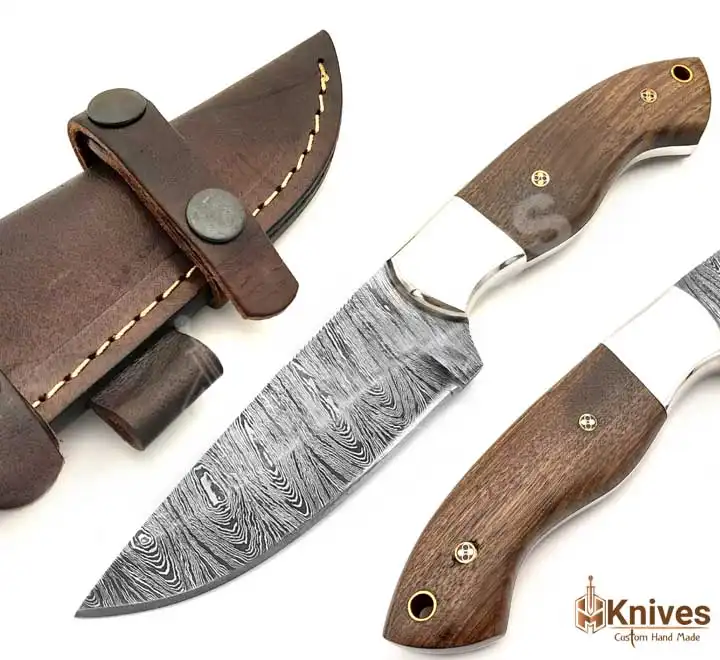
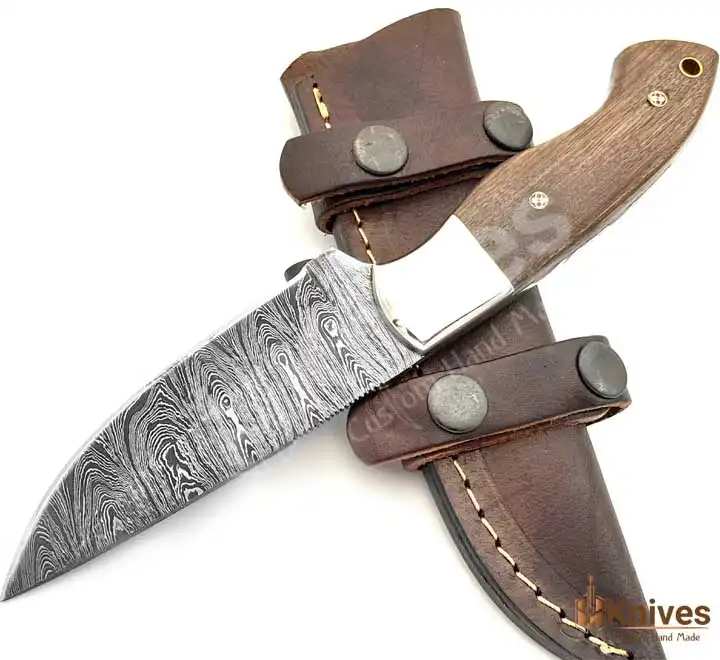
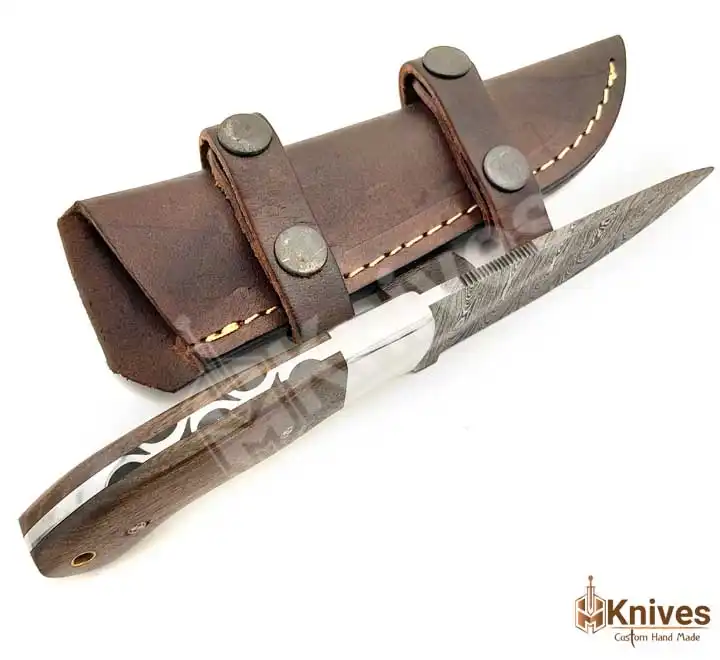
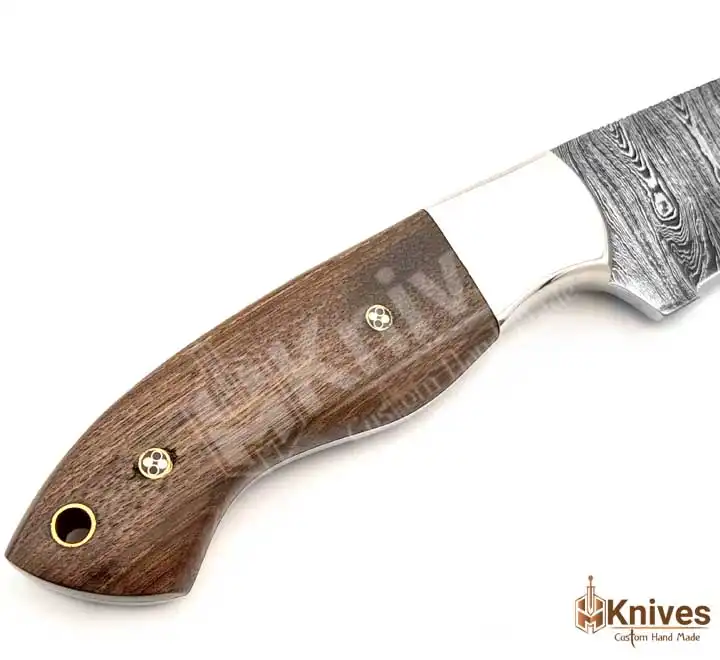
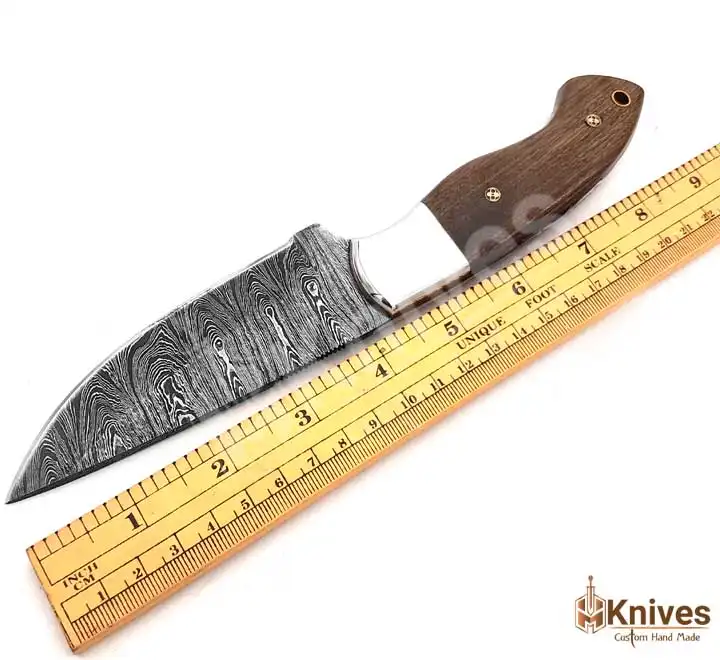
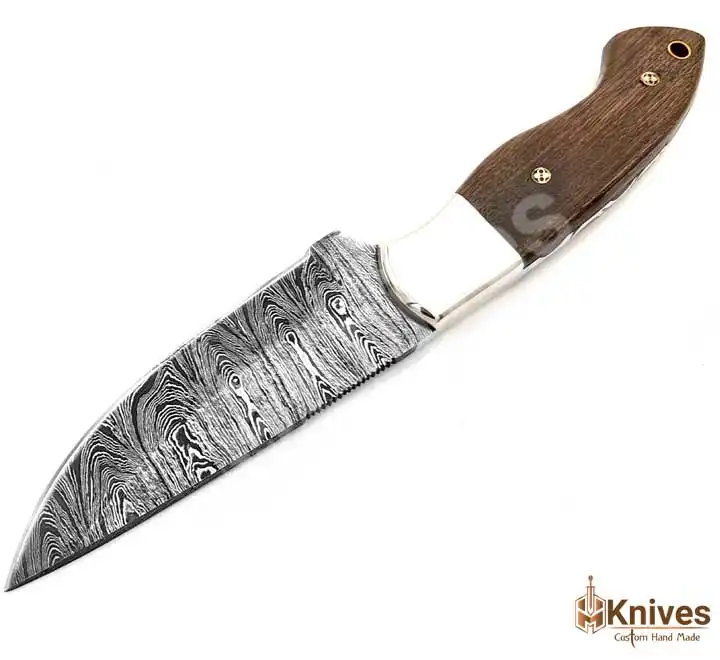
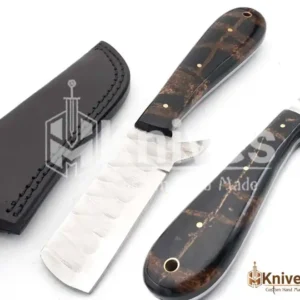
At 9 inches overall with a 4.5-inch Damascus blade, this is the only piece in the Skinner collection built with a natural wood handle rather than bone, horn, or resin. The dark brown wood is finished with file work and a steel bolster, giving it a warmer, more traditional look than the lighter or more colorful handles used elsewhere in the range.
Why Wood, When Most of the Collection Uses Bone or Horn
Wood handles bring a different feel and grip than bone or horn — generally a bit lighter, and less prone to the natural variation you get with animal-material handles, since wood grain tends to run more uniformly. It’s simply a different material choice, suited to anyone who prefers a traditional wood-handled look over the bone and horn options elsewhere in the collection.
The Blade
Hand-forged Damascus steel in a twist pattern, hardened to 58-60 HRC, with a 40mm blade width and 4mm thickness — a genuine working edge sized for real skinning and general cutting tasks.
Multi-Purpose by Design
Tagged across Skinner, Fishing & Camping, and Kitchen collections, this knife’s 9-inch size and blade geometry genuinely suit more than one setting — field dressing, cleaning fish, and general kitchen prep are all reasonable uses for a knife this size and edge profile.
Handmade to Order
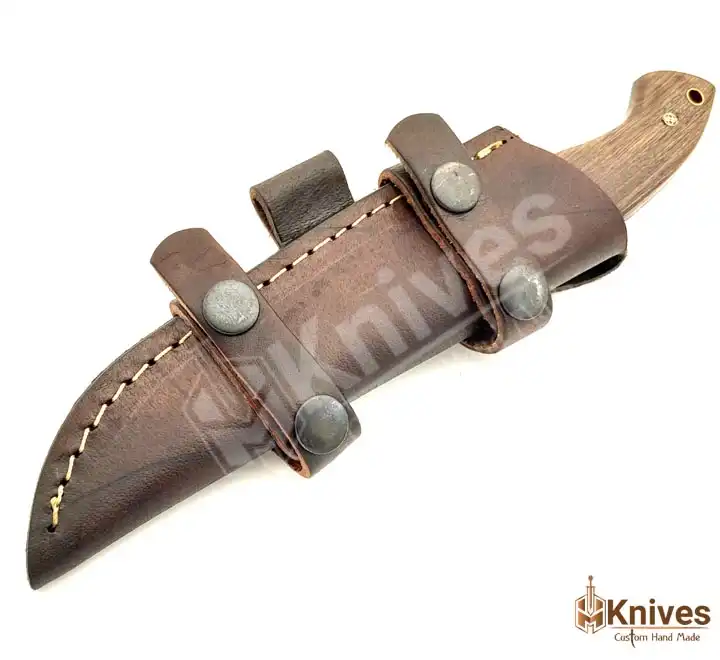
Every knife ships with a leather sheath built with belt space and is made to order, typically 5-7 business days before it leaves the shop. See the rest of our handmade damascus skinner knives if a bone, horn, or resin handle suits your preference better than wood.
Frequently Asked Questions
Why choose a wood handle over bone or horn? It comes down to preference — wood generally has a more uniform grain and a lighter feel, while bone and horn carry more natural individual variation. Neither is objectively better, just a different look and feel.
Does the wood handle need different care than bone or horn? Similar care applies — avoid prolonged soaking and dry it promptly if it gets wet. Wood can also benefit from an occasional light oiling to prevent drying out.
Is this genuinely a multi-purpose knife, or mainly a skinner marketed toward other uses? It’s built as a skinner first, but the size and edge geometry hold up well enough for fishing and general kitchen tasks too — it’s not purpose-built as a dedicated chef’s knife.
Will the Damascus blade need special maintenance? Wipe it dry after use and apply a light coat of oil periodically to prevent rust — the standard routine for any high-carbon steel blade.
Reviews
There are no reviews yet.