

Viking Axes: History, Types and Our Handmade Collection
What Is a Viking Axe?
Viking axes handmade from carbon steel are available in our complete collection — bearded axes, battle axes, hatchets, and throwing axes, each hand-forged and shipped worldwide. A Viking axe is a forged-steel single-bit axe produced by Norse blacksmiths in Scandinavia between 793 and 1066 AD, constructed from high-carbon steel at HRC 55–58 and ashwood (Fraxinus excelsior). Viking axes are distinguished from factory-cast alternatives by individual hand-forging on an anvil — each head is dimensionally unique, forged to order, not stamped from a mold.
Viking axes divide into four main sub-types: bearded axes (skeggøx), Dane axes (breiðöx), hatchets, and throwing axes (francisca). Viking axes are also identified as nordic axes or norse axes depending on the region and era of reference. HM Knives produces handmade Viking axes for sale starting at $140 — an affordable Viking axe in genuine hand-forged construction, not a cast replica.
| Hand-Forged | Carbon Steel HRC 55–58 | Ships 50+ Countries | Custom Engraving | Historically Referenced | Gift Wrapping |
|---|---|---|---|---|---|
| Hand-forged carbon steel — no factory production, no casting | High quality Viking axe: HRC 55–58 hardness — edge-holding specification | Ships to Canada, USA, UK, UAE, Australia and 47 further countries | Custom Viking axe for sale: runes, initials, dates, Norse motifs | Top rated Viking axes — designs referenced against Viking Age archaeological records | Viking axe gift for him — gift wrapping and presentation packaging available |
Every handmade Viking axe in our collection is forged individually, engraved on request, and shipped worldwide with a leather sheath.
Our Handmade Viking Axe Collection
HM Knives produces handmade Viking axes for sale in high-carbon steel. Designs include bearded axe, battle axe, camping hatchet, and throwing axe variants. Every axe forges to order. Every axe ships with a leather sheath. Viking axe price starts at $140. Norse axe options include rope-wrapped, acid-etched, and engraved finishes — all in high-carbon steel, not cast metal.
-
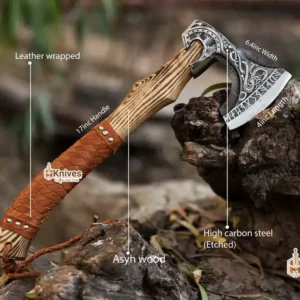
Bearded Viking Axe Forged Carbon Steel Axe with Textured Ashwood Handle & Brown Leather Wrapping
$190.00 -
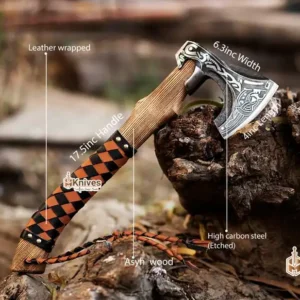
Carbon Steel Viking Axe Hand Made Axe with Textured Ashwood Handle & Black Brown Leather
$190.00 -
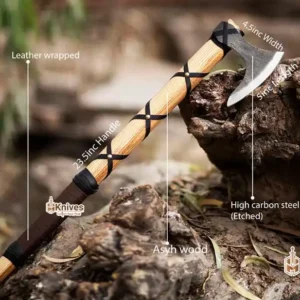
Custom Axe Hand Made Camping Axe Forged Carbon Steel Axe with Ashwood Handle & Brown Leather
$200.00 -
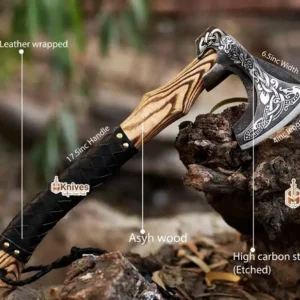
Custom Hand Made Bearded Viking Axe Forged Carbon Steel Axe with Textured Ashwood Handle
$190.00 -
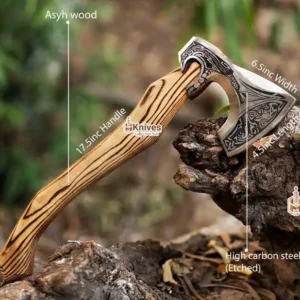
Forged Carbon Steel Viking Axe Acid Etched Steel Axe with Textured Ashwood Handle
$180.00 -
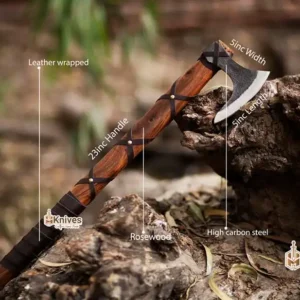
Outdoor Axe Viking Camping Axe Forged Carbon Steel Axe with Rosewood Shaft
$200.00 -
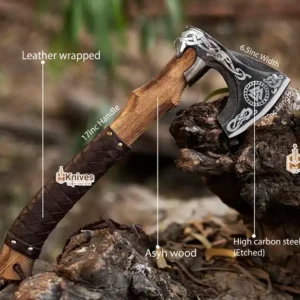
Ragnar Axe Viking Axe Forged Carbon Steel Axe Perfect Anniversary Gift Axe
$190.00 -
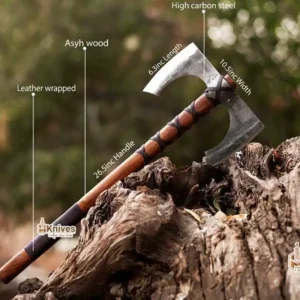
Smith Double Head Axe Forged Carbon Steel Axe with Rosewood Handle
$235.00 -
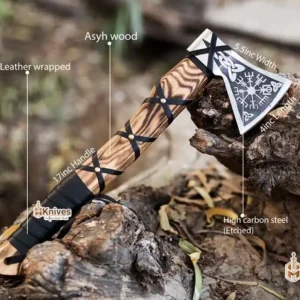
Viking Axe Etched Blade Forged Carbon Steel Axe with Engraved Ashwood Handle & Black Leather Wrapping
$190.00 -
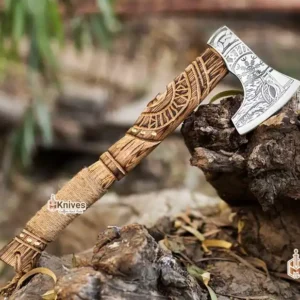
Viking Axe Forged Carbon Steel Axe with Engraved Ashwood Handle & Rope Wrapping
$190.00 -
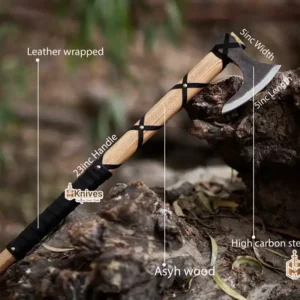
Viking Outdoor Axe Camping Axe Forged Carbon Steel Axe with Rosewood Handle Best Groomsmen Gift
$200.00
Types of Viking Axes — Which One Is Right for You?
Viking axes are a category of forged-steel single-bit and double-bit axes that divides into five historically distinct sub-types: the bearded axe, the Dane axe, the Viking hatchet, the battle axe, and the throwing axe. Sub-types differ in blade geometry, haft length, head weight, and historical function. All five types are available as best Viking axes for sale in the HM Knives handmade collection.
Bearded Axe (Skeggøx)
The bearded axe (skeggøx) is a single-bit Viking axe with an extended lower blade element called the beard. The beard projects 2–3 inches below the haft line, adding usable cutting edge without increasing head weight. Norse craftsmen used this geometry to hook shields in combat and control timber cuts in woodwork. Blade length: 5–8 inches. Head weight: 0.8–1.4 kg. Available as a bearded axe and bearded Viking axe for sale in high-carbon steel with ashwood or rosewood handles — the best bearded axe for collectors and gift purchase.
Dane Axe (Breiðöx)
The Dane axe (breiðöx — ‘broad axe’) is a two-handed Viking axe with a long haft and a broad symmetric blade. Haft length: 4–5 feet. Head weight: 1.5–2.5 kg. Blade width: 10–14 inches. The Bayeux Tapestry (1070s AD) depicts Huscarls using Dane axes at the Battle of Hastings in 1066. Available as a battle axe in high-carbon steel. Also available as a danish axe for sale with acid-etched blade detailing.
Viking Hatchet — Best Viking Axe for Camping
The Viking hatchet is a one-handed Viking axe with a compact head and a short haft. Head weight: 1.0–1.5 kg. Haft length: 14–16 inches. Norse settlers carried hatchets as everyday tools on longships and at camp settlements. The hatchet serves in wood splitting, rope cutting, and camp preparation. Available as a Viking hatchet for sale in full-tang carbon steel — the best Viking axe for camping in the range.
Viking Battle Axe — War Axe for Sale
The Viking battle axe is the largest single-bit axe in Norse weaponry — a war axe with a wide blade and a heavy head. Head weight: 2.0–3.0 kg. Blade width: 8–12 inches. Haft length: 24–30 inches. Every battle axe in the HM Knives range forges from high-carbon steel with a functional working edge — not a decorative casting. Available as hand forged war axes with acid-etched blade and rope-wrapped haft.
Viking Throwing Axe (Francisca) — Throwing Axe for Sale
The Viking throwing axe, historically named the francisca, is a short-hafted axe designed for ranged throwing. Haft length: 12–14 inches. Head weight: 0.8–1.2 kg. Frankish and Norse warriors threw the francisca at shield formations before close combat to break enemy positioning. Available as a throwing axe for sale — the best throwing axe option for Norse history collectors and display purchase.
| Type | Historical Name | Blade Width | Head Weight | Haft Length | Primary Function |
|---|---|---|---|---|---|
| Bearded Axe | Skeggøx | 5–8 inches | 0.8–1.4 kg | 16–22 inches | Close combat, woodwork |
| Dane Axe | Breiðöx | 10–14 inches | 1.5–2.5 kg | 4–5 feet | Two-handed combat |
| Viking Hatchet | — | 3–5 inches | 1.0–1.5 kg | 14–16 inches | Camp utility, field use |
| Battle Axe | War Axe | 8–12 inches | 2.0–3.0 kg | 24–30 inches | Warfare, display |
| Throwing Axe | Francisca | 4–6 inches | 0.8–1.2 kg | 12–14 inches | Ranged combat, display |
Carbon Steel Viking Axe Construction — Materials, Forging and Finish
Every high quality Viking axe from HM Knives starts as a steel billet. A blacksmith heats the billet to forging temperature — approximately 900–1,200°C — and shapes the head by hand on an anvil. No molds. No machine stamping. The result is a carbon steel Viking axe with individually unique geometry — no two axes are dimensionally identical.
Why Carbon Steel — Best Carbon Steel Viking Axe Material
Carbon steel contains 0.6–1.5% carbon by mass. This composition produces a Rockwell hardness of HRC 55–58 — sufficient to hold a working edge through repeated outdoor impacts without chipping. The best carbon steel Viking axe uses this alloy because it mirrors the iron-carbon composition Norse blacksmiths used in the Viking Age. Stainless steel alternatives reach only HRC 48–52 — lower edge retention and lower authenticity of composition. Every HM Knives carbon steel Viking axe forges at this hardness specification.
Ashwood Haft — Viking Axe Handle Material
Ashwood (Fraxinus excelsior) is the standard haft material for Viking axe handles. Ash produces a modulus of rupture near 103 MPa — one of the highest values among common handle timbers. This gives the handle shock absorption under impact and flexibility under sustained striking force. Norse craftsmen selected ash for these mechanical properties over a thousand years ago. HM Knives’ Viking axe handle designs shape from seasoned ashwood and finish in raw linseed oil to resist moisture absorption.
Acid Etching and Hand Engraving
Acid etching applies a controlled acid solution to a steel blade surface to produce a permanent oxidised pattern. Pattern depth: 0.1–0.3 mm — resistant to outdoor use and repeated sharpening without fading or lifting. Hand engraving cuts Viking axe handle designs by chisel, not laser — each mark is individually made. An engraved Viking axe carries initials, dates, Norse runes, or custom motifs to a custom Viking axe specification. Custom engraved orders ship in 10–14 business days.
| Material | Component | Key Property | Specification | Care Requirement |
|---|---|---|---|---|
| High-carbon steel | Axe head | Edge retention, impact resistance | HRC 55–58 | Mineral oil every 2–3 months |
| Ashwood (Fraxinus excelsior) | Standard haft | Shock absorption — 103 MPa MOR | Seasoned, linseed oil finish | Linseed oil annually |
| Rosewood | Premium haft | Higher density, weather resistance | Danish oil finish | Danish oil annually |
| Full-grain leather | Sheath, wrapping | Weather protection, grip | — | Leather conditioner annually |
| Acid-etched pattern | Blade surface | Permanent decorative, non-structural | 0.1–0.3 mm depth | None required |
Viking Axes in History — Design Origins and Archaeological References
Viking axes originate from Norse metalworking traditions established in Scandinavia between the 8th and 11th centuries. Historical specimens survive in museum collections across Denmark, Norway, Sweden, and the United Kingdom. HM Knives uses these archaeological records as the design references for every hand forged Viking axe for sale in the collection — not fantasy prop catalogues, not film replicas.
Viking Age Origins — 793 to 1066 AD
The Viking Age began in 793 AD with the Norse raid on Lindisfarne Monastery and ended in 1066 AD at the Norman Conquest of England. Scandinavian blacksmiths forged axes during this period from pattern-welded iron and high-carbon steel — a composite construction that placed hard steel at the cutting edge and softer iron in the body to resist fracture. Carbon content in period specimens ranges from 0.4–0.8% at the edge zone. Unlike swords, axes were affordable and carried by warriors, farmers, and craftsmen alike.
Famous Viking Axes in History and Saga
The Mammen Axe (Denmark, 970 AD) is a surviving specimen at the National Museum of Denmark — its iron head inlaid with silver wire in Norse knotwork patterns, classified as a Viking Age ceremonial weapon. The Bayeux Tapestry (c. 1070s AD) depicts Huscarls using Dane axes at the Battle of Hastings in October 1066. The Laxdæla saga references a named axe as a warrior heirloom — a cultural pattern repeated across Old Norse literature. The Ragnar Axe in the HM Knives range references the Ragnar Lothbrok saga tradition directly.
Which Viking Axe Fits Your Need?
Viking axes divide into three primary use contexts: display and collection, outdoor and field use, and gift purchase. The table below matches each context to the correct axe type and product. For complementary outdoor cutting tools, hunting knives and skinner knives cover field dressing and camp cutting needs.
Our axes function as camping tools, display pieces, and collector items — the carbon steel head and working-edge geometry handle practical outdoor use. The best Viking axe for camping and the best Viking axe for display are two different products — the table below clarifies both.
| Your Use Case | Recommended Product | Price From | Notes |
|---|---|---|---|
| Gift for him — birthday, groomsmen | Ragnar Axe or Custom Bearded Viking Axe | $160 | viking axe gift for him — engraving options available |
| Wall display / home décor | Rope-Wrapped Viking Axe or Etched Blade Axe | $150 | decorative Viking axe for sale — acid-etched, display-ready |
| Camping and outdoor field use | Outdoor Camping Viking Axe — Rosewood | $200 | best Viking axe for camping — full-tang, 1.2 kg head |
| History collecting / Norse enthusiast | Dane Axe or Battle Axe design | $180 | battle axe for sale — historically referenced Bayeux Tapestry design |
| Custom / personalised order | Custom Bearded Viking Axe — any tier | $160 | custom Viking axe for sale — 3 engraving tiers |
| 18-inch size specifically | 18 Inch Viking Axe | See product | 18 inch Viking axe for sale |
| Throwing / francisca design | Viking Throwing Axe | $145 | throwing axe for sale — compact head, 12–14 inch haft |
| Best value entry point | Forged Carbon Steel Acid Etched | $140 | affordable Viking axe — entry-level hand-forged |
Viking Axe Gift for Him — Customization and Personalization
Handmade Viking axes are among our most frequently ordered gift purchases — available with custom engraving and gift-ready packaging shipped worldwide. Viking axe gift for him describes personalised handmade axe purchases — ordered for birthdays, anniversaries, groomsmen occasions, and Norse history enthusiasts. HM Knives produces top rated Viking axes in three customisation tiers. Every handmade Viking axe for sale in the gift category ships with gift wrapping and a care card. Custom orders dispatch in 10–14 business days.
Customization Tiers
HM Knives produces custom Viking axe for sale orders at three tiers. Tier 1 covers handle material selection — ashwood or rosewood — and sheath finish choice. Tier 2 adds handle engraving: initials, a name, a date, or a Norse rune inscription cut by chisel. Tier 3 covers full custom design: blade acid-etching pattern, rune inscription, and handle carving to a unique specification. Submit a Tier 2 or Tier 3 order via the contact page .
| Tier | What Is Customised | Delivery Time | Best For |
|---|---|---|---|
| Tier 1 | Handle material + sheath finish | Standard dispatch | Display purchase, personal collector |
| Tier 2 | Handle engraving — name, date, rune | 10–14 business days | Birthday, anniversary, groomsmen gift |
| Tier 3 | Blade etching + rune inscription + handle carving | 10–14 business days | Bespoke gift, fully personalised heirloom |
How to Care for a Carbon Steel Viking Axe
Carbon steel is tougher than stainless and holds a sharper edge — but it requires basic upkeep to stay in top condition. Here’s everything you need to know to maintain your axe for decades.
How to Prevent Rust on a Carbon Steel Axe
Carbon steel oxidises in humid storage conditions and after water contact. Apply a thin layer of food-grade mineral oil or gun oil to the blade surface every 2–3 months. After outdoor use, wipe the blade dry within 30 minutes of contact with moisture. Store the axe in its leather sheath — leather breathes and prevents condensation buildup. Surface patina — a grey-brown oxidised layer — forms over time on carbon steel. Patina does not reduce blade performance.
How to Sharpen a Viking Axe Blade
Viking axe blades sharpen at a 25–30 degree bevel angle. Use a coarse diamond file or a 200-grit whetstone for edge restoration. Work from the heel of the blade to the toe in consistent strokes, maintaining the bevel angle throughout. Finish with a leather strop to realign the edge. The full sharpening process takes 10–15 minutes per side. For step-by-step detail, see the knife and blade sharpening guide.
How to Maintain a Viking Axe Handle
Ashwood Viking axe handles absorb moisture in outdoor conditions. Apply raw linseed oil to ashwood handles once or twice per year — rub in with a cloth, allow 12 hours to penetrate, then wipe off excess. Rosewood Viking axe handle variants require danish oil or beeswax conditioner applied annually. A maintained ashwood handle resists cracking and splitting in field conditions for 10+ years.