
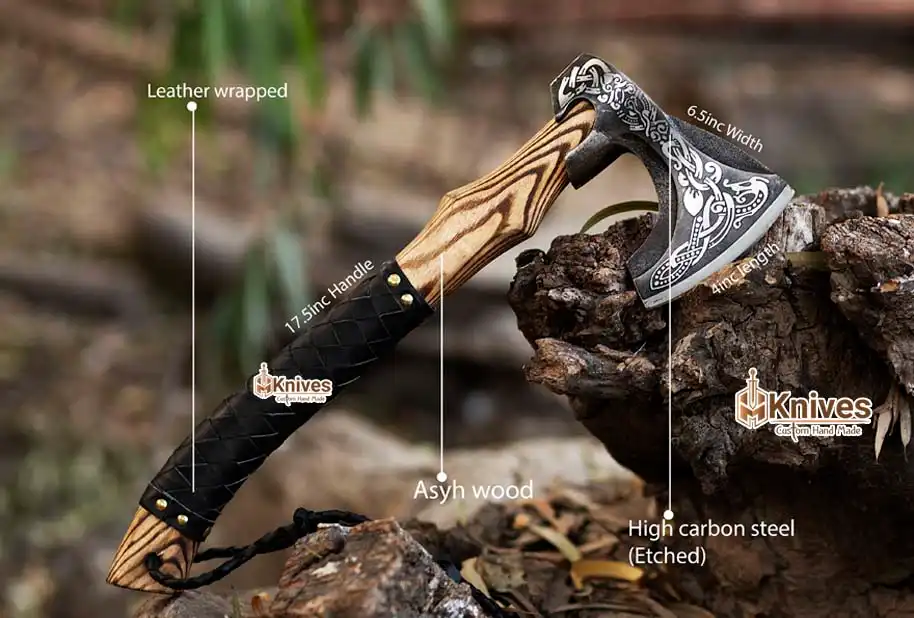
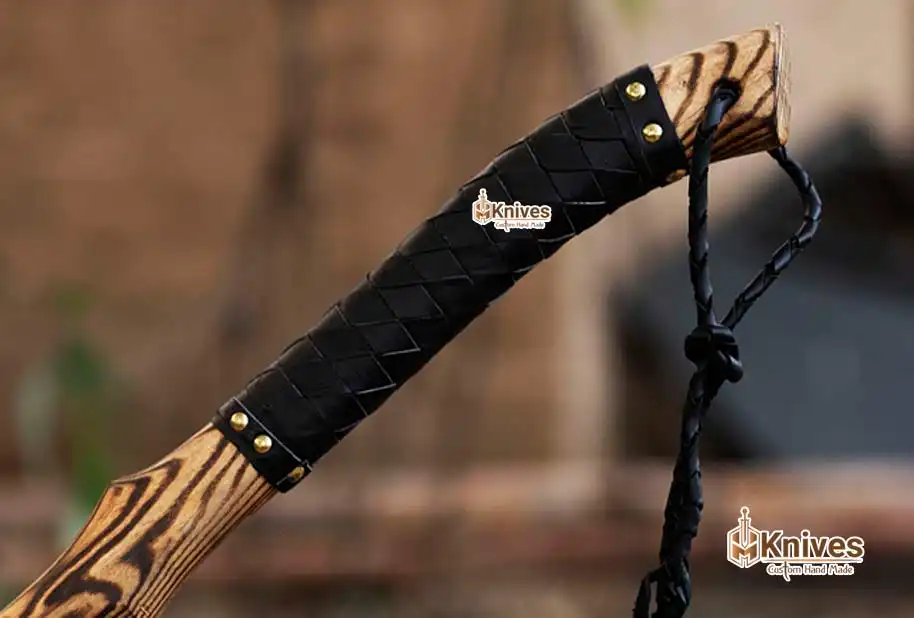
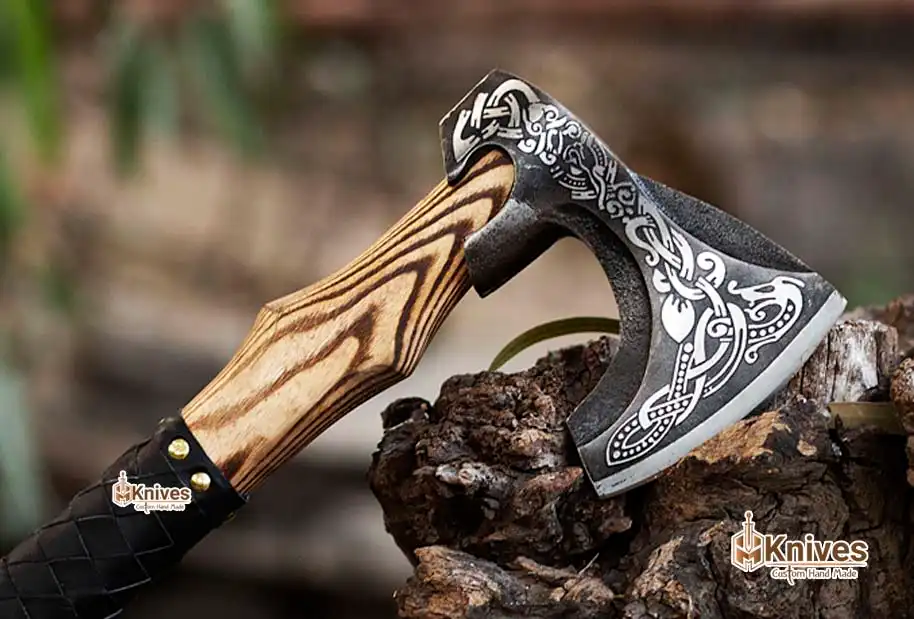
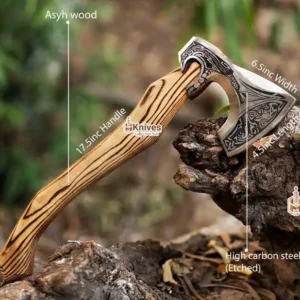
Carbon steel gets chosen for tools like this for one reason: it takes and holds an edge better than most alternatives, and it’s straightforward to bring back to sharp with nothing more than a stone and a few minutes. This axe is built around that steel, forged by hand rather than stamped, with a 17.5-inch overall length and a 4-inch cutting edge sized for real work without becoming a burden to carry.
What “High Carbon” Actually Means Here
The head is hardened to 58-60 on the Rockwell scale. That’s a deliberate middle ground — soft enough that the edge won’t chip if it catches a knot wrong, hard enough that it doesn’t roll over after a dozen swings. It’s the same hardness range serious bushcraft and camp axes are built to, not a display-only number. This hardness and steel choice runs through most of what we forge — see the full handmade viking axe collection for the rest of the range.
Bearded Profile, Ashwood Handle
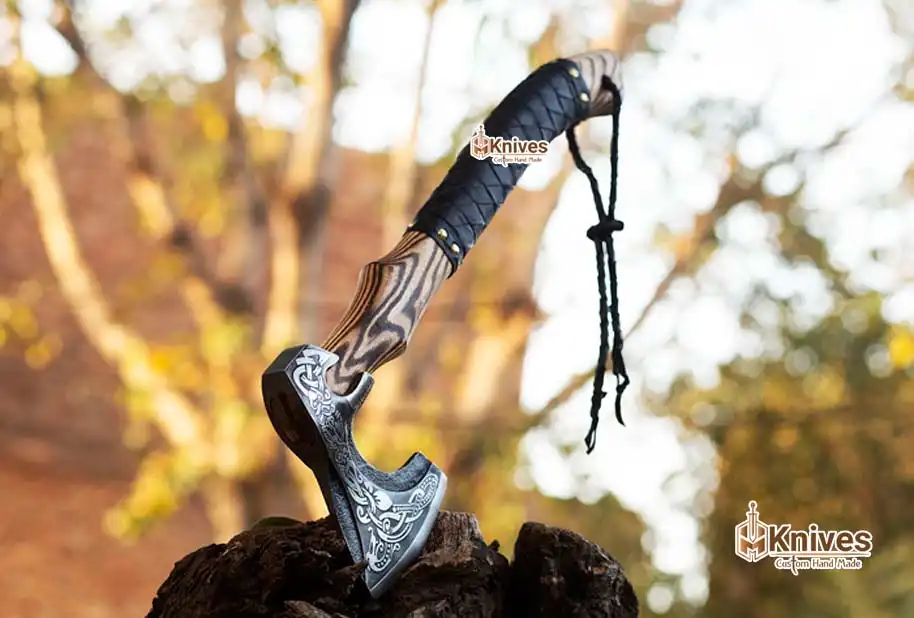
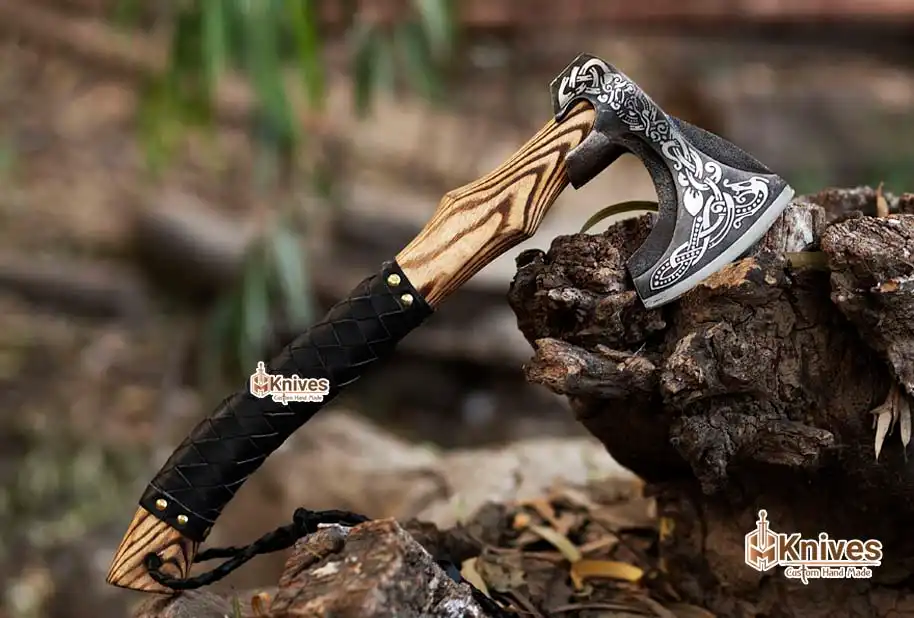
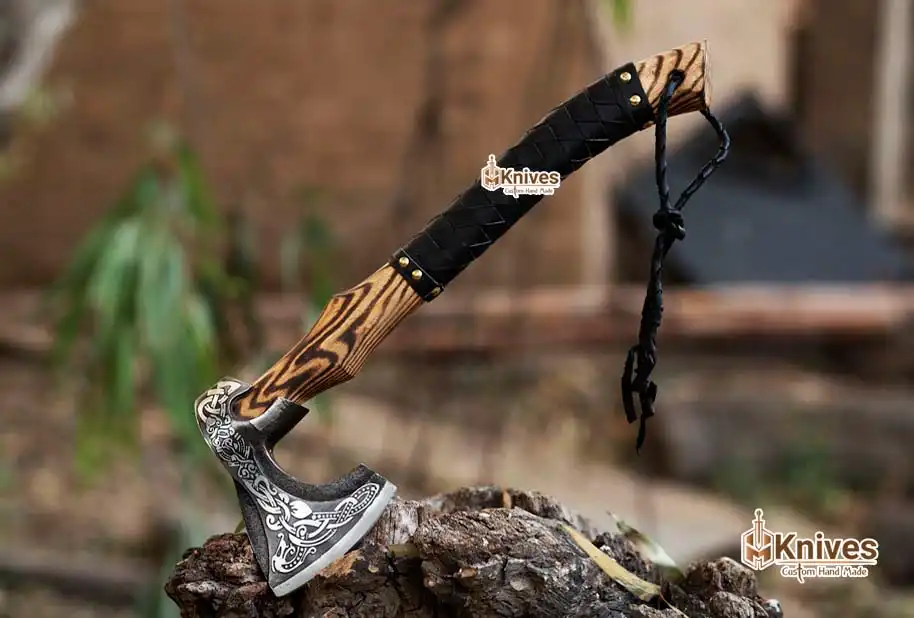
The blade carries a bearded shape — the extended lower curve that lets you choke up close to the edge for controlled cuts, alongside full swings for splitting and general chopping. The handle is textured ashwood, chosen because it absorbs shock without going brittle, which matters more than people expect after the twentieth swing of an afternoon.
Where This Axe Actually Gets Used
This isn’t a shelf piece pretending to be functional. It’s sized and weighted for camp work — kindling, clearing brush, shaping a stake, general chopping around a fire — and it holds up to that use because the steel and the hardening are real, not just numbers on a spec sheet. If you’re after a decorative-only piece, plenty of options exist; this one’s built to actually swing.
Handmade to Order
Every axe includes a leather sheath and is made to order — plan on 5-7 business days before it ships. Since each head is individually forged, minor variation in grain and hammer marks is normal and expected, not a defect. Custom engraving is available if you want initials, a symbol, or a personal touch added to the blade.
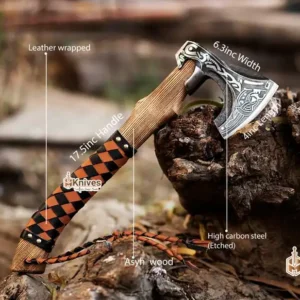
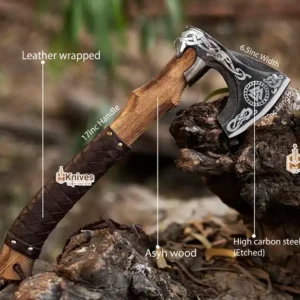
Prefer a brown leather wrap instead? Our Bearded Viking Axe is the same forged head and steel, finished differently.
Frequently Asked Questions
Why carbon steel instead of stainless? Carbon steel holds a sharper edge longer and is easier to resharpen in the field. The tradeoff is it needs to be kept dry and oiled to avoid rust — stainless trades some edge performance for lower maintenance.
How hard is the blade, and what does that mean for use? 58-60 HRC — hard enough to hold an edge through real use, soft enough to avoid chipping on impact. It’s the range most quality bushcraft tools are hardened to.
Does the ashwood handle need any care? An occasional light oiling keeps it from drying out or cracking, the same as any hardwood tool handle exposed to outdoor use.
Will this rust if I don’t maintain it? Yes, if left wet — carbon steel isn’t rust-proof. Wipe it dry after use and oil it before storage. Full steps are on our axe care guide.
Reviews
There are no reviews yet.