
Philip Thapa, Founder of HM Knives
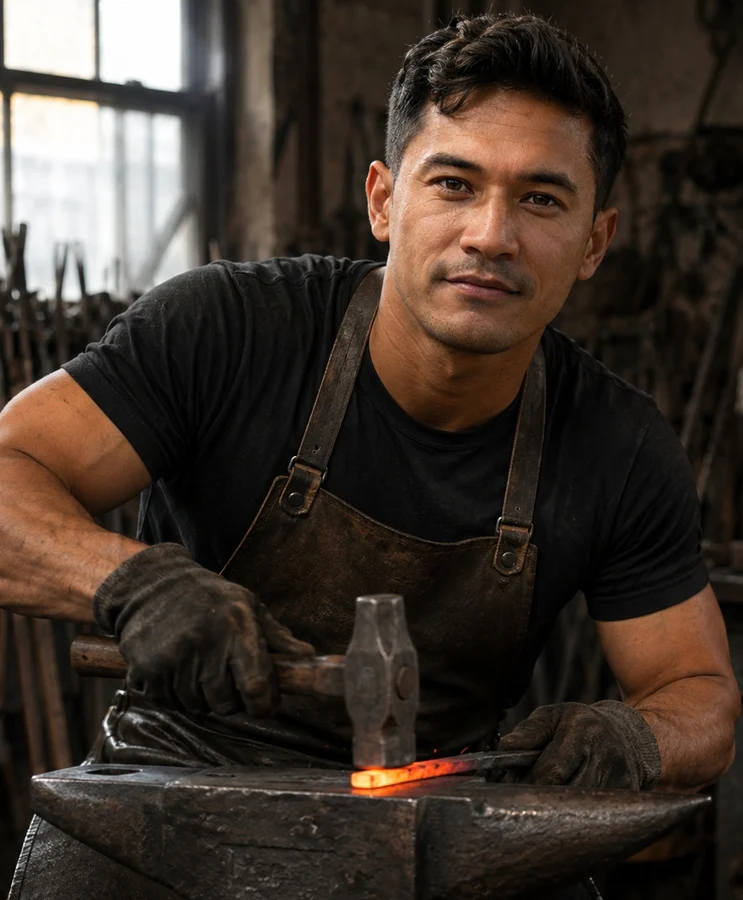
23 Years at the Forge
Philip Thapa has been making knives for 23 years. He did not learn it on a course or from a book. He learned it the way most working knifemakers always have: in a family workshop, from people who had been doing it long before he was old enough to hold a hammer.
HM Knives is the continuation of that. The trade passed down a generation, and in 2020 it began selling under this name. It remains a family business, and Philip still works on the blades rather than only running the company.
Why the Trade Was Worth Continuing
Knifemaking is an unglamorous business to inherit. It is hot, repetitive and unforgiving of inattention, and a billet that fails after six hours of work is simply six hours gone.
What makes it worth doing is that the outcome is honest. A blade either cuts or it does not, and no amount of description changes that. A knife made properly will still be working in thirty years, sharpened perhaps two hundred times, outliving almost everything else bought in the same year.
What We Actually Make
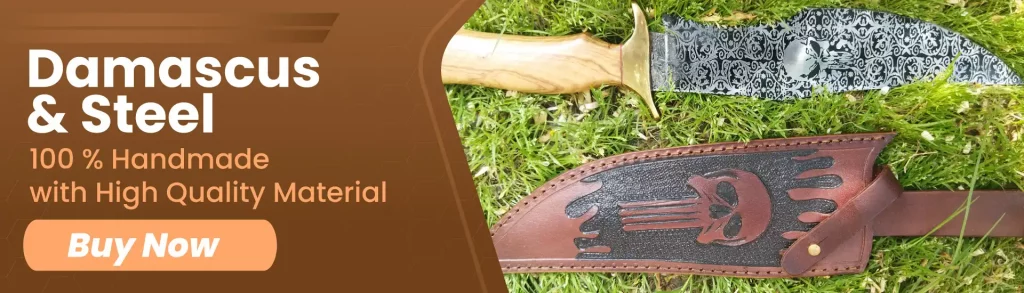
Our Damascus blades are forged from 1095 and 1043/15N20 and finished at HRC 58 to 60. We also work in 1095, J2 and D2 for non-Damascus blades. Handles are offered in resin, bone, stag, micarta, wood and sheep horn.
| Specification | What we use | Why |
|---|---|---|
| Damascus billet | 1095 + 1043/15N20 | Compatible hardening, strong etch contrast |
| Other blade steels | 1095, J2, D2 | Range from easy sharpening to long edge life |
| Finished hardness | HRC 58-60 | Holds a working edge, survives bone without chipping |
| Construction | Hand forged, individually heat treated | Heat treatment decides performance more than steel choice |
| Handle materials | Resin, bone, stag, micarta, wood, sheep horn | Composites grip wet; naturals are chosen for appearance |
What We Will Tell You Plainly
Our Damascus is carbon steel, and it rusts. 1095 and 15N20 both contain no meaningful chromium. Damascus is a construction method, not a stainless alloy, and any seller telling you otherwise is either mistaken or hoping you are. Dry the blade, oil it occasionally, and it will last a lifetime.
Layer count is decoration, not performance. More layers give a finer pattern. They do not make a knife sharper or harder.
We do not hold trade certifications. No bladesmithing society membership, no accreditations. What we have is 23 years at the forge and specifications you can check. We would rather publish the hardness figure than borrow someone else’s credential.
The Workshop
Eight craftsmen work on the knives, with the work divided by stage rather than each person making a blade end to end. Forge welding and heat treatment are the two stages where knives are won or lost, and both reward doing the same thing thousands of times. Our workshop page introduces the team and sets out what happens at each stage.
What We Have Written
Rather than describe our expertise, it is easier to show it. Philip writes the guides on this site — seventeen of them now — and several argue against spending more money with us:
- Damascus vs high carbon steel — including why ours is not stainless
- Where to spend your money on knives — why a cheaper knife plus stones beats an expensive one
- Handmade vs production knives — including when production is the better buy
- How to sharpen a knife — the full technique, step by step
- Knife steel types and how they perform
- The best knife type for every use case
Ask Us Anything Specific
Ask which steels are in a blade, what hardness it is finished to, and whether it is stainless, and you will get a direct answer. If a cheaper knife in our range suits your work better, we will say so.
Contact us with what you actually cut, or browse the full collection.