
How to Choose the Right Viking Axe: A Buyer’s Guide
Table of Contents Start With What You Will Actually Do With It Budget: What $180 to $235 Actually Buys You
Table of Contents Start With What You Will Actually Do With It Budget: What $180 to $235 Actually Buys You
Table of Contents An Everyday Tool That Became a Legend Why the Axe, Not the Sword, Was the Viking’s Weapon
Table of Contents Same Search, Four Different Things What Actually Makes an Axe a “Viking Axe” Viking Axe vs. Battle
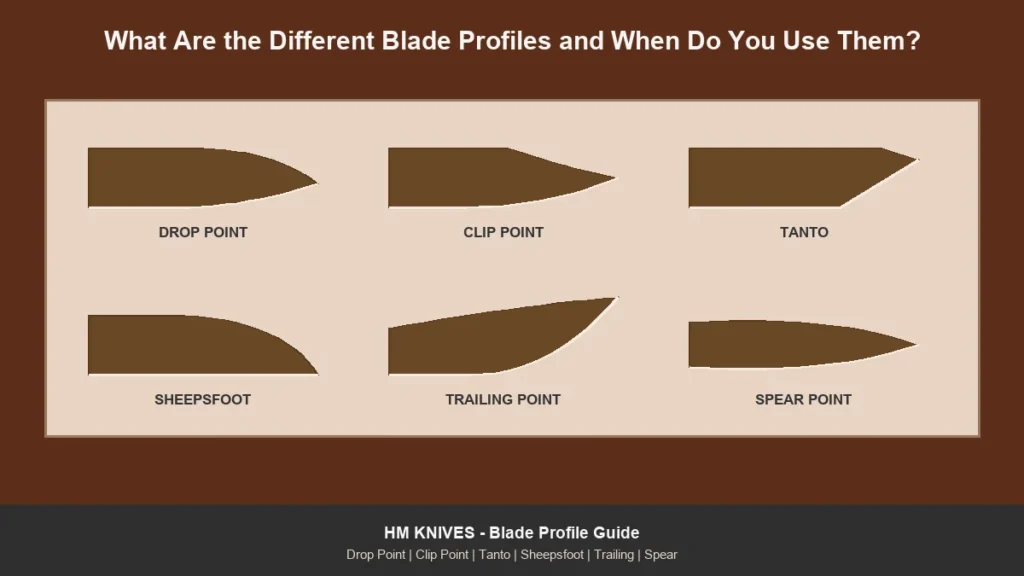
Drop point, clip point, tanto, sheepsfoot, trailing point and more, compared on tip strength, belly and piercing. Every profile trades point strength against slicing belly – this is where each one sits and why.
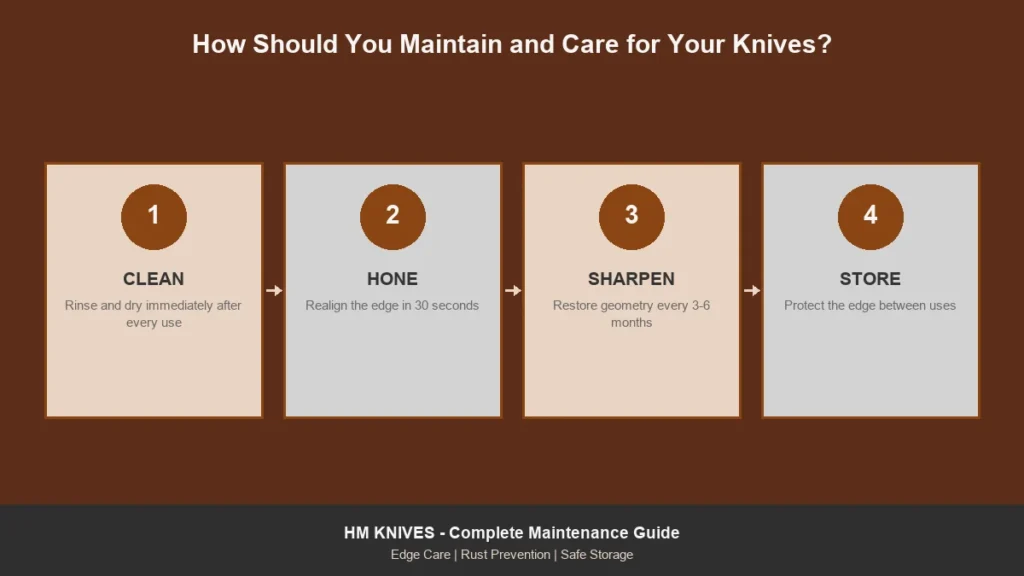
Dry it, oil it, and never store it in a leather sheath. Honing versus sharpening, whetstone grits, edge angles by knife type, rust prevention for carbon steel, and a maintenance routine that takes minutes a week.
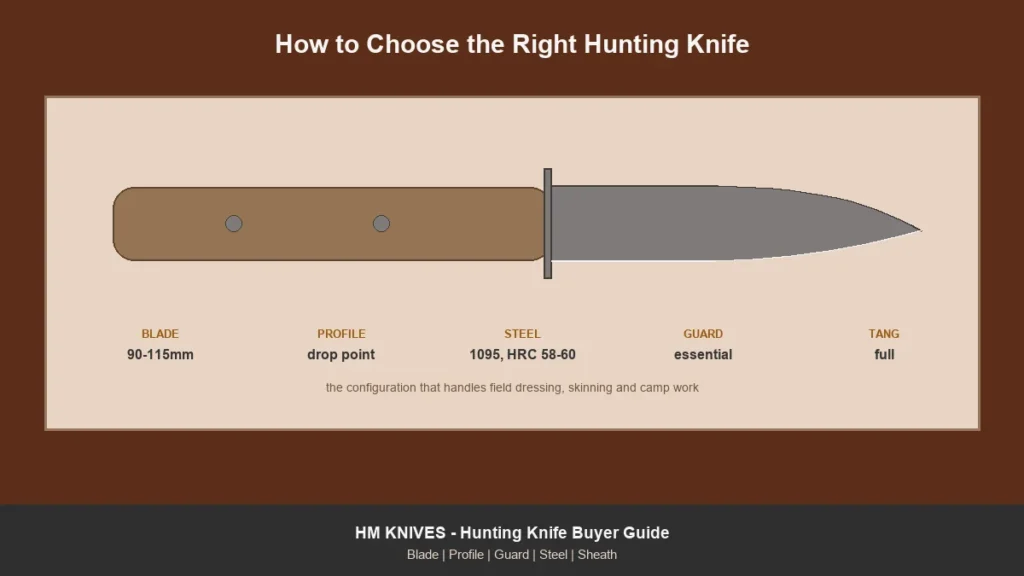
A full tang drop point, 90-115mm, HRC 58-60, with a guard and a grippy handle. Blade length by game size, why the guard is a safety feature rather than decoration, and the features that are worth paying for.
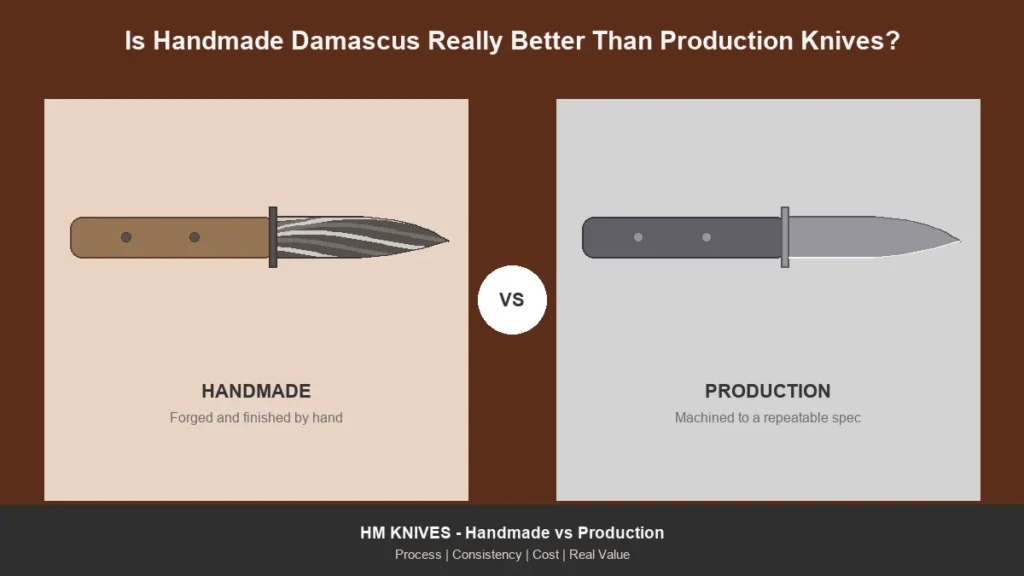
Handmade is not a performance specification. Where production genuinely wins, where hand work earns its premium, what the extra money actually buys, and why under $100 a production knife is the better purchase.
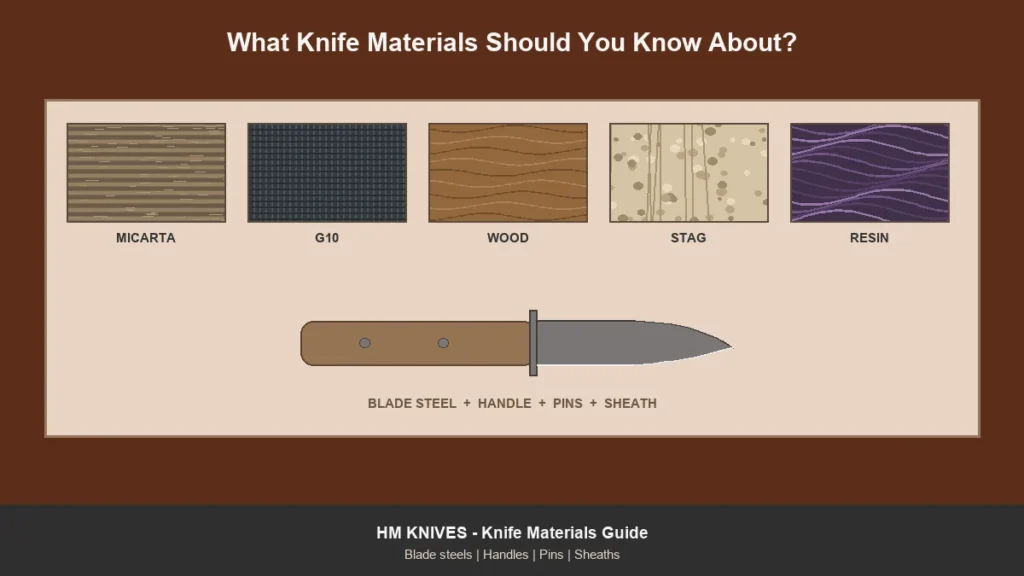
Four material decisions, not one: blade steel, handle, pins and sheath. What 1095, 15N20, D2 and the stainless grades actually do, and why micarta grips better wet while stag and polished bone do not.
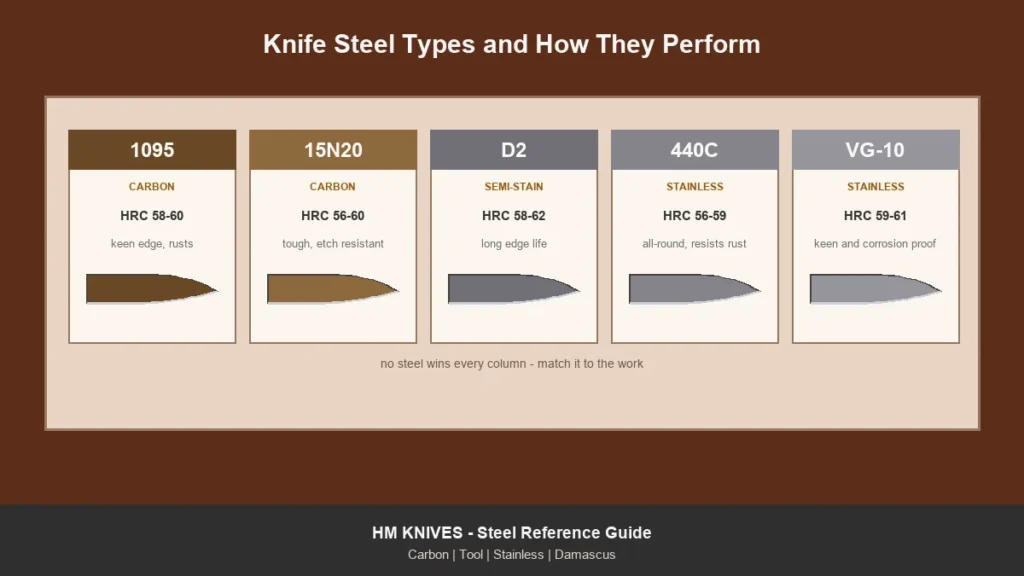
A steel name tells you what a blade could be; the hardness tells you what it is. What each alloying element does, what HRC means in practice, and how 1095, 15N20, D2, 440C and VG-10 compare across the four properties.
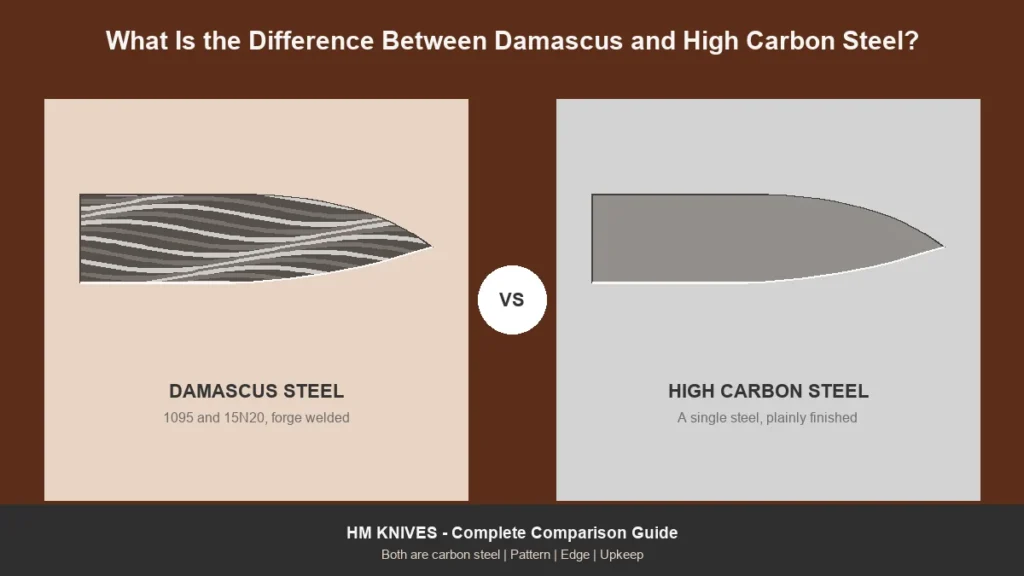
Damascus is a construction method, not a steel. Ours is 1095 and 15N20 at HRC 58-60 – both carbon steels, so it rusts. What the layers genuinely change, what they do not, and when plain high carbon is the better buy.