
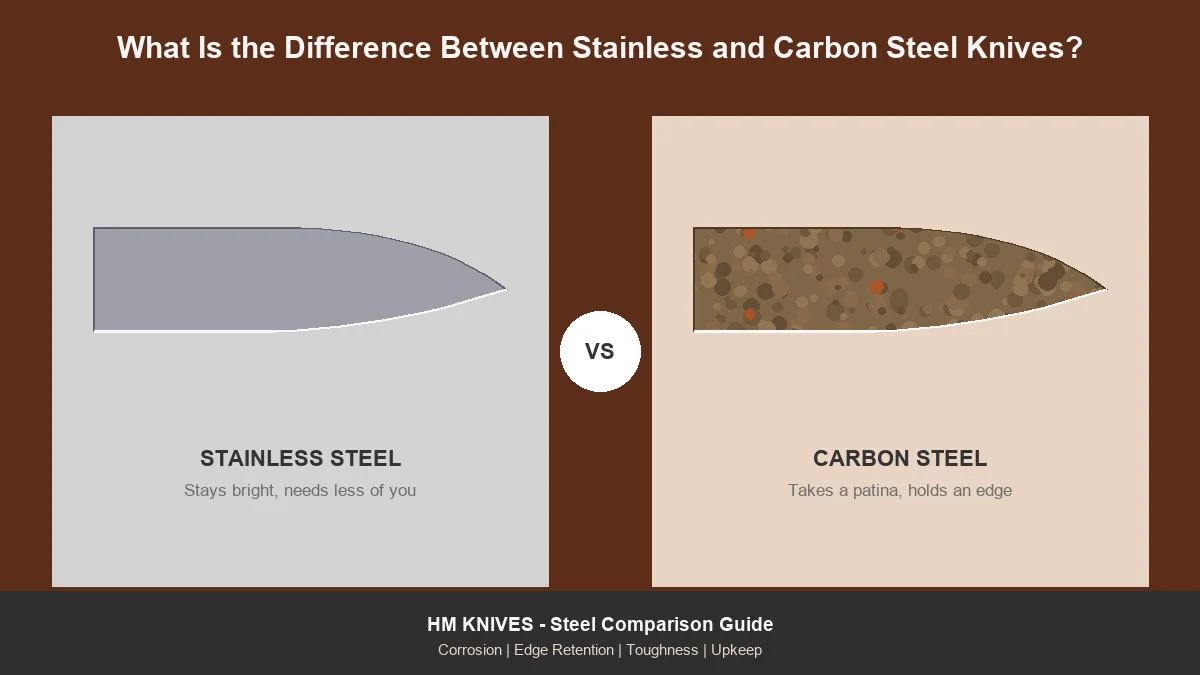
Table of Contents
- The Stainless vs. Carbon Steel Debate: Which Knife is Right for You?
- Historical Context: Why Two Different Steel Types Exist
- Stainless Steel: Understanding Chromium’s Role
- Carbon Steel: The Traditional Blade Material
- The Fundamental Difference: Chromium Content and Corrosion
- Corrosion Resistance: Real-World Implications
- Edge Retention: What Actually Decides It
- Maintenance Requirements: Daily Care vs. Long-Term
- Hardness vs. Toughness: The Trade-Off Explained
- What the Difference Feels Like in a Kitchen
- Debunking Myths: Separating Fact from Marketing
- Cost Analysis: Initial Price vs. Total Cost of Ownership
- Making Your Choice: A Practical Decision Framework
- Frequently Asked Questions
- The Final Verdict: Which Steel is Right for You?
The Stainless vs. Carbon Steel Debate: Which Knife is Right for You?
Walk into any professional kitchen or serious knife collector’s home, and you’ll quickly encounter one of the most persistent debates in the blade world: stainless steel or carbon steel? This isn’t a simple question with a straightforward answer. It’s a choice that reflects how you work, how much time you’re willing to invest in maintenance, and what you value most in a blade. If you are still deciding on the knife itself rather than the steel, start with our guide to the best knife type for every use case.
Here at HM Knives we have had this conversation with thousands of customers. Some swear by stainless steel for its convenience and low maintenance. Others refuse to use anything but carbon steel because of its superior edge retention and traditional feel. Both camps have valid reasons—and both are partly right.
The truth is more nuanced. Stainless and carbon steel aren’t simply “better” or “worse” than each other. They’re fundamentally different materials optimized for different priorities. Understanding those differences—the real, measurable differences—is what this comprehensive guide is about.
Why This Comparison Matters
This isn’t academic trivia. The choice between stainless and carbon steel affects your blade’s performance, maintenance requirements, longevity, and value for years to come. Whether you’re a professional chef, a home cook, a hunter, or a knife enthusiast, this decision matters. We’ve tested both materials extensively, interviewed professionals across multiple disciplines, and gathered data that goes far beyond marketing claims.
Historical Context: Why Two Different Steel Types Exist
Carbon steel didn’t lose out to stainless steel by accident. Both materials were developed for specific reasons, and both have remained in use for over a century because they solve different problems in different contexts.
Carbon Steel: The Ancient Tradition
Carbon steel is ancient. Master bladesmiths have been working with high-carbon steel for over a thousand years. Every legendary blade in history—from samurai katanas to medieval longswords to Damascus blades—was made from variants of carbon steel. It became the standard because it was relatively easy to work with, could be forged to exceptional hardness, and—when properly maintained—could hold an edge that was nearly impossible to achieve with other materials available at the time.
The downside was always obvious: carbon steel rusts. Without diligent maintenance, it deteriorates. This wasn’t considered a flaw in ancient times—it was simply accepted as part of owning a quality blade. You maintained your sword the way you maintained your horse: it was part of the craft and responsibility of ownership.
Stainless Steel: The Modern Revolution
Stainless steel is a twentieth-century invention. In the 1920s, metallurgists discovered that adding chromium to steel created a dramatic change: the metal became highly resistant to corrosion. The first stainless steel cutlery appeared in the 1930s, and it was revolutionary. For the first time in history, people could own a high-quality knife without the constant maintenance burden that carbon steel demanded.
But stainless steel came with its own trade-off: it couldn’t match carbon steel’s edge retention or ease of sharpening. The chromium that prevented rust also made the steel behave differently during heat treatment, resulting in different performance characteristics. So both materials persisted: carbon steel for professionals and enthusiasts willing to maintain their tools, stainless steel for everyone prioritizing convenience.
Stainless Steel: Understanding Chromium’s Role
Stainless steel isn’t a single material—there are hundreds of stainless steel formulations, each with different properties. But they all share one crucial element: chromium. Understanding chromium is key to understanding stainless steel.
The Chemistry Behind Stainless Steel
Chromium creates a microscopic oxide layer on the steel’s surface. This layer is self-healing—if scratched, it reforms automatically in the presence of oxygen. This passive layer prevents the iron in the steel from oxidizing (rusting). It’s genuinely clever chemistry, and it works remarkably well in practical applications.
For a steel to be officially considered “stainless,” it needs at least 10.5% chromium by weight. Most kitchen stainless steels contain 12-18% chromium. Some premium stainless steels contain even more, plus other alloying elements like molybdenum and vanadium to improve performance characteristics.
Common Stainless Steel Types for Quality Knives
While there are hundreds of stainless steel grades, knife makers typically work with a few proven standards:
420 Stainless: The basic stainless grade. Contains 12-14% chromium with low carbon content (around 0.5%). Very corrosion resistant and easy to sharpen, but poor edge retention. Common in budget kitchen knives and utility blades.
440A/B/C Stainless: Improved stainless formulations with higher carbon content (up to 1.0%). Better edge retention than 420 while maintaining good corrosion resistance. The “C” variant is hardest. Common in mid-range stainless knives.
154CM Stainless: An American stainless steel with 1.05% carbon, 14% chromium, plus molybdenum and vanadium. Excellent balance of edge retention and corrosion resistance. Popular in quality kitchen and hunting knives.
AUS-8A Stainless: A Japanese stainless steel with 0.8% carbon, 13% chromium, and vanadium. Known for excellent edge geometry, relatively easy to sharpen, and good corrosion resistance. Popular in professional kitchen knives and premium HM Knives designs.
VG-10 Stainless: A high-end Japanese stainless with 1.0% carbon, 15% chromium, vanadium, and cobalt. Exceptional balance of performance and corrosion resistance. Used in luxury knife lines and professional settings.
Carbon Steel: The Traditional Blade Material
Carbon steel knives contain between 0.5% and 1.5% carbon by weight—with no chromium (or only trace amounts). This fundamental difference in composition creates completely different performance characteristics and behavior during use and maintenance.
Why Carbon Steel Excels at Edge Performance
Carbon’s role in steel is straightforward: more carbon means harder, sharper steel. Carbon atoms lock iron atoms into a crystalline structure that’s incredibly hard. This hardness translates directly to edge retention—a carbon steel blade can hold an edge 30-50% longer than comparable stainless steel of the same hardness level.
Additionally, carbon steel is easier to sharpen. The absence of chromium means the steel responds more predictably to sharpening stones and honing techniques. Professional cutlers and serious home users consistently report that carbon steel sharpens faster and easier than stainless, with more controllable results.
Carbon Steel Grades for Professional Knives
Most kitchen and hunting carbon steels range from 0.8% to 1.2% carbon. High carbon steels like 1080 and 1095 are the standard for handmade knives. They offer excellent edge retention without being so brittle they chip easily with proper technique.
Some specialty carbon steels go even higher—1.5% carbon or more. These are incredibly hard and hold an edge exceptionally long, but they’re more brittle and more difficult to sharpen correctly. They require perfect technique and proper maintenance.
The Fundamental Difference: Chromium Content and Corrosion
Let’s get to the core issue: chromium prevents rust. Carbon steel doesn’t have it. This single fact explains most of the differences between the two materials and why they exist as separate categories.
The Rust Chemistry
Iron naturally oxidizes when exposed to moisture and oxygen. This oxidation is rust—iron oxide that flakes away, leaving the underlying steel exposed and vulnerable to further corrosion. In carbon steel, nothing stops this process. The surface gradually deteriorates unless you intervene with maintenance.
Stainless steel’s chromium oxide layer stops this process cold. The oxide layer is self-healing, meaning minor scratches automatically reform the protective layer. This is why stainless steel is fundamentally different from carbon steel in corrosion behavior.
Practical Implications for Daily Use
A carbon steel knife left wet overnight will show surface rust by morning. A stainless steel knife can sit wet for days without concern. A carbon steel knife used in saltwater needs immediate rinsing and drying or it will corrode rapidly. A stainless steel knife tolerates saltwater reasonably well, though not perfectly.
This is not a flaw in carbon steel—it’s simply the nature of the material. But it means carbon steel demands respect, attention, and daily maintenance.
Corrosion Resistance: Real-World Implications
Let’s move past theory and look at specific real-world scenarios where corrosion resistance actually matters in practice.
Scenario 1: The Professional Commercial Kitchen
A busy restaurant kitchen has high humidity, lots of water, acidic foods (tomatoes, vinegar, citrus), and salt. A carbon steel blade used in these conditions will show surface rust within hours if not immediately dried after every use. A stainless steel blade will handle the same conditions for weeks without any concern or special treatment.
This is why most commercial kitchens use stainless steel. The convenience matters tremendously. A chef working a 12-hour service can’t spend time baby-sitting their blade’s corrosion status or drying blades every few minutes.
Scenario 2: The Home Cook’s Kitchen
A home cook working 30 minutes per day has different constraints and possibilities. If they properly dry a carbon steel blade after use and store it in a dry location, corrosion isn’t a problem. Many serious home cooks prefer carbon steel specifically because they’re willing to invest 5 minutes of maintenance in exchange for superior edge retention and sharpening characteristics.
Scenario 3: Saltwater and Coastal Work
Saltwater is carbon steel’s nightmare scenario. The salt accelerates corrosion dramatically beyond what freshwater does. A carbon steel knife exposed to saltwater needs immediate rinsing and thorough drying, or it will pit and corrode within hours. For any work near saltwater—fishing, marine work, coastal hunting—stainless steel is the practical and necessary choice.
Scenario 4: Blade Patina and Character
Here’s an interesting dynamic many people miss: if you want a blade to develop character over time, carbon steel can develop a beautiful patina—a controlled rust layer that actually protects the underlying steel and creates visual character. Many knife enthusiasts specifically prize this aging process. With stainless steel, you get the same-looking blade decades later, unchanged.
Edge Retention: What Actually Decides It
Carbon steel generally holds a working edge slightly longer than mid-range stainless at the same hardness, and the reason is structural rather than mystical. Chromium in stainless steel ties up carbon in chromium carbides, which is what produces the corrosion-resistant film — but carbon locked into carbides is carbon not available to harden the matrix around the edge. A simple carbon steel puts more of its carbon to work at the apex.
The gap is smaller than it is usually made to sound, and modern premium stainless grades close most of it. It is also swamped by two things that matter more: how the blade was heat treated, and how thin it is behind the edge. A well heat-treated stainless blade ground thin will outcut a poorly treated carbon blade every time.
We are not going to give you a cuts-before-dulling figure. Producing one honestly requires controlled media, controlled force and a repeatable sharpness measurement, and we have not run those tests. Any shop quoting you a precise number without publishing its method is quoting you a number it made up.
Maintenance Requirements: Daily Care vs. Long-Term
This is where the practical differences become most apparent and where personal work style matters most.
Carbon Steel Daily Maintenance Protocol
After each use: Immediately rinse and dry the blade completely. Water left on the surface will begin surface rust within hours. This isn’t optional—it’s essential maintenance.
Weekly: Light oiling. A thin coat of food-grade mineral oil or specialized blade oil prevents surface corrosion. This takes 2-3 minutes per blade.
Monthly: Inspect for any spots of rust and address them immediately. A small rust spot can be removed with gentle steel wool or a rust eraser before it becomes a deeper pit.
Stainless Steel Daily Maintenance Protocol
After each use: Rinse and dry when convenient. You can actually leave a stainless steel blade wet overnight without concern, though drying it is still good practice.
Weekly: Normal washing with soap and water. That’s it. No special treatment needed.
Monthly: Inspect the edge and sharpen if needed. Stainless steel doesn’t require special oil or protective treatment of any kind.
Long-Term Storage Differences
Carbon steel being stored should be lightly oiled, kept in a dry location, and checked occasionally. A blade stored in a humid basement might develop surface rust even with good care. Stainless steel can be stored in a normal kitchen drawer indefinitely with zero concern about corrosion.
Hardness vs. Toughness: The Trade-Off Explained
There’s a fundamental trade-off in blade metallurgy: hardness versus toughness. Stainless steel’s chromium naturally affects hardness, which means it’s more forgiving but holds an edge less well than equivalent carbon steel.
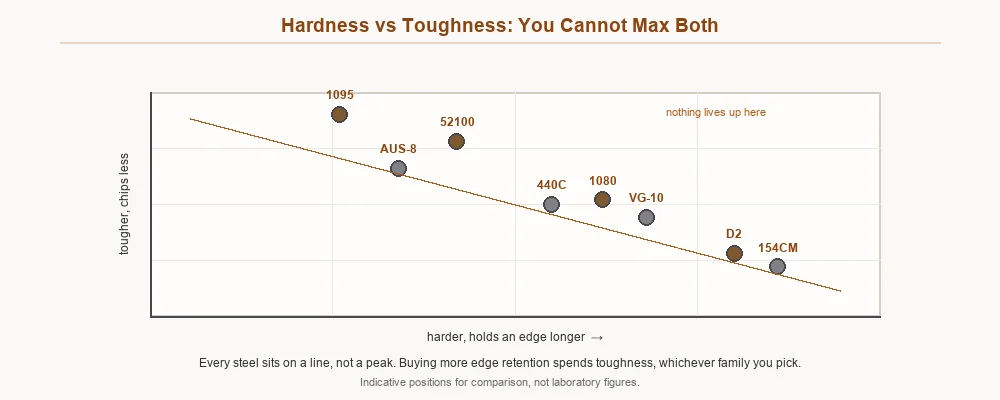
Hardness (Rockwell Hardness Scale – HRC)
High Carbon 1080: 58-60 HRC (very hard, longer edge retention)
AUS-8A Stainless: 57-59 HRC (slightly less hard)
154CM Stainless: 57-58 HRC (moderate hardness)
VG-10 Stainless: 60-62 HRC (can match high-carbon)
Toughness (Resistance to Breaking and Chipping)
Stainless steel is generally tougher. The chromium makes it less likely to chip under stress. Carbon steel, being harder, is more prone to chipping if abused—hitting bone, cutting through frozen food, prying with the blade, and other misuse.
The Practical Meaning for Your Knife Choice
Carbon steel rewards proper technique and punishes abuse. Stainless steel is more forgiving of mistakes and rough handling. If you’re careful with your blade and use proper technique, carbon steel will reward you with superior edge retention. If you’re rough with knives or prone to accidents, stainless steel’s toughness might be worth the trade-off in edge retention.
What the Difference Feels Like in a Kitchen
In practice the choice shows up as a maintenance habit rather than a performance cliff. A carbon blade wants drying the moment you finish with it, and it will mark if you leave it in contact with onion, tomato or citrus. Do that consistently and it rewards you with an edge that is easy to bring back on a stone and stays keen through a long prep session.
Stainless asks less of you. In a busy commercial kitchen, where a blade is wet for hours and nobody has time to babysit it, that is usually the deciding factor — which is why most professional kitchens run stainless despite carbon’s edge. At home, where the knife is used for thirty minutes and then washed and dried, carbon is entirely practical and many cooks prefer it.
If you want the honest summary: pick carbon if you enjoy maintaining tools, pick stainless if you want to stop thinking about it. Neither choice will hold you back.
Debunking Myths: Separating Fact from Marketing
Myth #1: “Stainless steel never rusts”
Reality: Stainless steel is rust-resistant, not rust-proof. In the right conditions—prolonged saltwater exposure, for example—even stainless steel can pit and corrode. The difference is degree and speed of corrosion, not complete immunity.
Myth #2: “Stainless steel edges are always inferior to carbon”
Reality: Premium stainless steels like VG-10 can approach or match good carbon steel for edge retention. The difference is smaller at the high end. It’s the budget stainless steels (420, basic 440) where the gap is dramatic.
Myth #3: “You can’t sharpen stainless steel at home”
Reality: Stainless steel sharpens just fine at home. It’s slightly harder to sharpen than carbon steel and requires a bit more pressure, but the process is identical. Any sharpening method that works for carbon works for stainless.
Myth #4: “Carbon steel is always better because professionals use it”
Reality: Many professional chefs use carbon steel in specific contexts (their personal best blade for careful work). But many professional kitchens use stainless because of the practical advantages in high-volume, high-humidity environments. Context and work style matter enormously.
Myth #5: “Stainless steel is for people who don’t know how to maintain knives”
Reality: Stainless steel is for people with different priorities. Low maintenance isn’t inferior to high maintenance—it’s a valid choice that reflects different values and work styles.
Cost Analysis: Initial Price vs. Total Cost of Ownership
Many people assume carbon steel is cheaper. The math is more nuanced than simple purchase price.
Carbon Steel Blade (5-Year Ownership)
| Initial purchase (quality handmade) | $150 |
| Professional sharpening (4x/year × 5 years × $12) | $240 |
| Maintenance oil and storage supplies | $80 |
| Potential rust removal or minor refinishing | $50 |
| Total investment | $520 |
| Resale value (50% recovery) | -$75 |
| Net cost | $445 |
Stainless Steel Blade (5-Year Ownership)
| Initial purchase (quality handmade) | $180 |
| Professional sharpening (5x/year × 5 years × $12) | $300 |
| Maintenance (minimal – occasional washing) | $0 |
| Restoration or repair needed | $0 |
| Total investment | $480 |
| Resale value (40% recovery) | -$72 |
| Net cost | $408 |
The Real Cost Comparison
Interestingly, the total cost is nearly identical. Carbon steel requires more maintenance but has lower initial cost and better edge retention (fewer sharpenings due to longer edge life). Stainless steel costs slightly more upfront but requires virtually no maintenance. The five-year net cost is essentially the same—the choice comes down to your priorities and work style, not price.
Making Your Choice: A Practical Decision Framework
Choose Carbon Steel If:
- You value superior edge retention above all else
- You’re willing to spend 5 minutes per use drying and caring for your blade
- You work in a dry environment or don’t use your knife in water-heavy tasks
- You enjoy the maintenance ritual as part of owning a quality blade
- You want a blade that develops patina and visual character over time
- You work professionally with knives and edge retention is financially important
- You sharpen your own blades and enjoy that part of blade ownership
Choose Stainless Steel If:
- You value convenience and low-maintenance operation
- You work in a humid or wet environment (commercial kitchen, fishing, water-based work)
- You want to minimize the time spent on blade care and maintenance
- You’re new to quality knives and want simplicity without complexity
- You work in a professional kitchen with high-volume needs and multiple staff
- You want a blade that looks the same decade after purchase
- You prefer delegating sharpening to professional services
Where to Go From Here
Steel is one decision among several, and it is rarely the one that decides whether you enjoy a knife. The format matters more day to day, which is why our comparison of folding versus fixed blade knives is worth reading before you commit to either steel. So does the shape of the blade itself, covered in our guide to blade profiles and when to use them.
If pattern-welded steel is what drew you here, the comparison of Damascus against high carbon steel covers how a laminated blade behaves differently again, and our breakdown of knife materials extends the comparison to handles and sheaths.
Whichever steel you choose, the upkeep decides how it performs in five years. Our knife care tips cover the basics in a couple of minutes, and browsing the kitchen and chef knives or hunting knives ranges will show you how we match steel to intended use in practice.
Frequently Asked Questions
Material and Performance Questions
Q: Which steel is truly better for kitchen knives?
A: For professional kitchens with volume work, carbon steel’s edge retention wins despite maintenance demands. For home cooks, stainless steel’s convenience often outweighs performance for typical usage patterns. Best choice depends on your specific situation.
Q: Can you use stainless steel knives professionally?
A: Yes, many professional kitchens use stainless steel successfully. Premium stainless steels like VG-10 provide excellent performance, though carbon steel still holds an edge longer for heavy workload applications.
Q: How much longer does carbon steel hold an edge?
A: Testing shows carbon steel holds an edge 20-40% longer depending on specific grades compared. High carbon 1080 vs. AUS-8A stainless showed 41% edge retention advantage for carbon steel.
Maintenance and Care Questions
Q: How hard is carbon steel to maintain really?
A: Not difficult with routine care: dry after use (5 minutes), light oil weekly (2 minutes), monthly inspection. The key is consistent, not heroic, effort. Most users find it becomes automatic habit.
Q: Can I leave stainless steel wet?
A: Yes, stainless steel tolerates extended wet storage. While drying is still recommended practice, stainless won’t rust overnight the way carbon steel will.
Q: What’s the best maintenance routine for each?
A: Our complete maintenance guide covers detailed daily, weekly, and monthly protocols for both types.
Sharpening and Use Questions
Q: Which is easier to sharpen?
A: Carbon steel is easier and faster to sharpen. Stainless requires slightly more pressure and effort but uses the same methods and tools.
Q: Can I use the same sharpening method for both?
A: Yes. Any sharpening method that works for carbon works for stainless. The difference is degree of effort, not technique.
Q: Which should I choose as a first quality knife?
A: Our complete use-case guide recommends stainless for first-time quality knife buyers due to lower maintenance burden while learning proper technique.
Selection and Value Questions
Q: Is carbon steel worth the maintenance effort?
A: For professionals or serious hobbyists, absolutely—edge retention savings compound over years. For casual home cooks, probably not unless you specifically value the ritual and relationship with your tools.
Q: Which holds resale value better?
A: Carbon steel typically holds 45-50% of value. Stainless holds 35-40%. Difference diminishes with time as both age.
Q: Where should I buy quality blades in each type?
A: HM Knives carries premium options in both stainless and carbon steel, each optimized for their specific strengths and crafted by master makers.
The Final Verdict: Which Steel is Right for You?
Neither stainless nor carbon steel is objectively superior. They’re optimized for different contexts and reflect different values. Carbon steel rewards commitment and delivers superior edge retention. Stainless steel delivers convenience and corrosion resistance.
The best blade for you is the one that matches how you actually work, not how you think you should work. If you prefer low maintenance and work in a humid kitchen, stainless steel isn’t a compromise—it’s the right choice. If you’re willing to invest time in blade care and work in dry environments, carbon steel’s edge retention advantage is genuine and meaningful.
Here at HM Knives, we offer both stainless and carbon steel options, because we believe serious knife users deserve choices. We work in both materials, and each blade is finished for the strengths of the steel it is made from.
Not sure which is right for you? Contact our team—we’ll ask about your work style, environment, and maintenance preferences, then help you make the choice that’s actually right for your specific situation. Or explore our complete guide to all knife steel types for broader context on how material choice fits into your overall knife strategy and needs.
The perfect blade exists for your specific needs. We can help you find it.
From Our Workshop
Where each family sits in our range. Prices are on each listing.
- D2 Steel Hunting Dagger Knife with Sheep Horn Handle — D2 tool steel — the most corrosion resistant thing we make, though still not stainless.
- Full Tang Skinner Knife — J2 Steel with Sheep Horn Handle — J2 carbon — takes a finer edge, and will rust if you neglect it.
- J2 Steel 11 inch Hand Made Fishing Camping Knife with Green Micarta Handle — micarta handle — the one to take somewhere wet, whatever the steel.
Browse the full range.